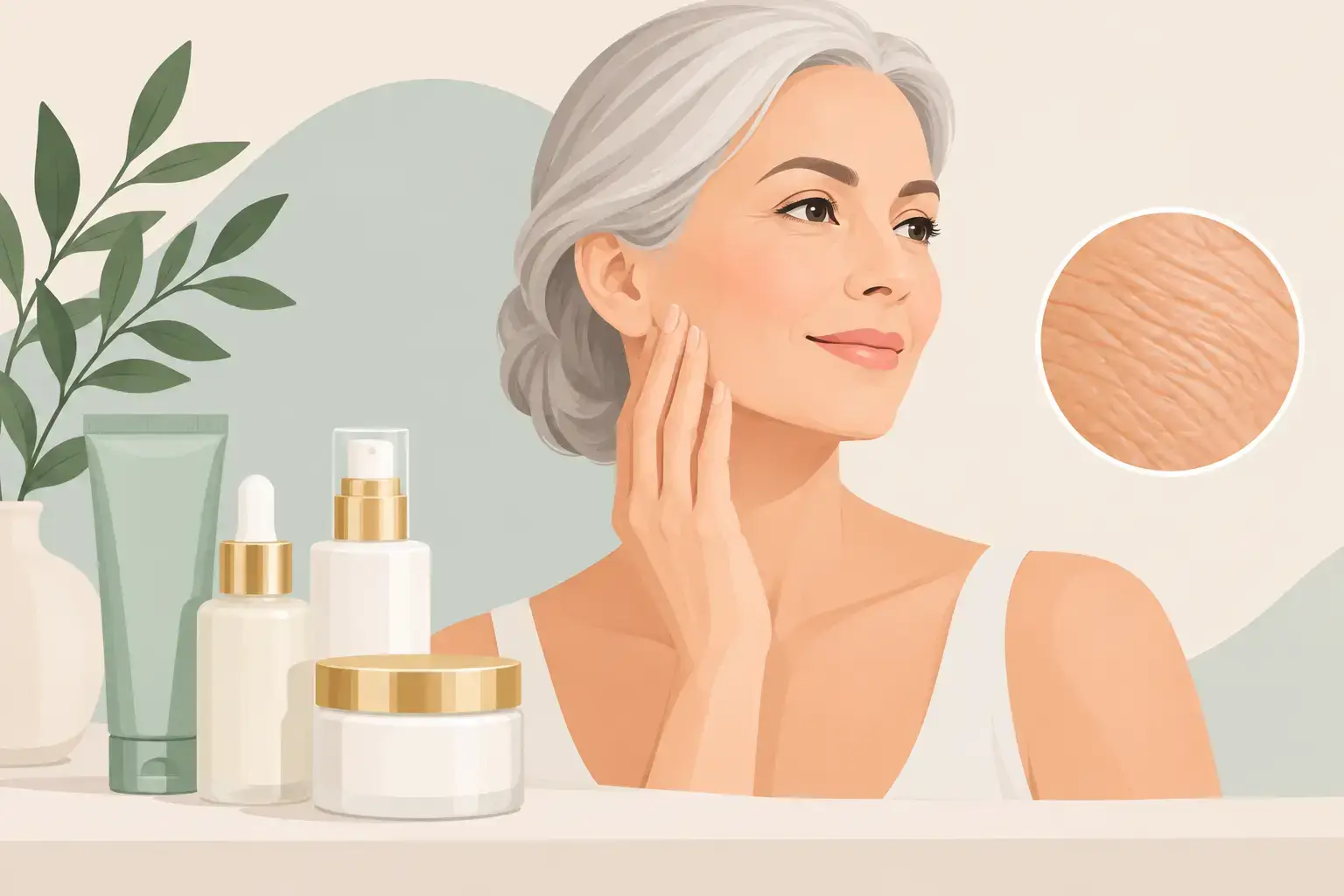
Crepey skin often asks for a different kind of attention than a fine line on the face. It can feel papery, dry, or less resilient, especially where skin is thin and often exposed: the neck, chest, upper arms, hands, and ears. The best products for crepey skin are rarely the loudest or the most numerous. They are the ones you can use thoughtfully and consistently, with respect for skin that has spent years in motion, sunlight, and open air.
There is no single cream that can erase every change in texture. But a well-chosen routine can help skin feel more cushioned, hydrated, and cared for over time. The goal is not to chase a younger-looking version of yourself. It is to give often-forgotten skin the same consideration you already give your face.
What Crepey Skin Is Asking For
Crepey texture usually reflects several things happening at once. Skin may be low on moisture and lipids, making it look finely wrinkled or fragile. Natural changes in collagen and elastin can affect firmness over time. Sun exposure can compound both concerns, particularly on the chest, forearms, neck, and ears.
This is why a simple moisturizer is helpful, but sometimes not sufficient. The most useful approach combines humectants that draw in water, emollients that soften roughness, and barrier-supporting ingredients that help hold moisture in place. During the day, sun protection matters just as much as what you apply at night.
It also helps to consider location. The skin on the neck and décolleté is thinner than much of the skin on the body and moves constantly. A strong body exfoliant that feels fine on the legs may be too much for the chest. The ears, often missed entirely, need gentler care and reliable sunscreen rather than a crowded collection of active treatments.
The Best Products for Crepey Skin Work in Layers
Rather than looking for one dramatic solution, choose a small group of products with clear roles. A routine does not need to be complicated to be meaningful.
A barrier-minded moisturizer
Start with a cream or lotion that leaves skin comfortable, not merely slick. Look for ingredients such as glycerin, hyaluronic acid, squalane, ceramides, fatty acids, and nourishing plant oils. These ingredients support the skin’s moisture barrier and can improve the immediate feel of dry, crinkled texture.
For the body, a richer cream can be especially welcome after bathing, when skin is still slightly damp. For the neck and chest, choose a texture you will actually enjoy applying every evening. Consistency is easier when a formula feels elegant on the skin and does not leave your collarbone, sleepwear, or hairline feeling coated.
A retinoid, used with patience
Retinoids are vitamin A derivatives commonly used to support smoother-looking texture and address visible signs of photoaging. They can be a worthwhile option for some people, particularly on the chest, arms, and hands. But more is not better. Thin, reactive, or dry skin may become irritated when a retinoid is introduced too quickly.
Begin with a low-strength over-the-counter retinol or retinal product a few nights each week, then follow with a nourishing moisturizer. Avoid applying it to compromised or freshly exfoliated skin. The neck can be sensitive, so many people do better using a gentler formula there, or reserving retinoid use for the face and body where their skin tolerates it well.
If you are pregnant, nursing, managing a skin condition, or using prescription treatments, speak with a qualified clinician before adding a retinoid. A calm routine is more valuable than one that leaves skin inflamed.
Gentle exfoliation when texture feels rough
A mild alpha hydroxy acid, such as lactic acid, can help soften rough, dry surface texture on the arms or legs. Urea is another thoughtful ingredient, offering both hydration and gentle smoothing benefits. These can be particularly useful when crepey skin also feels flaky or uneven.
Use exfoliating treatments sparingly, perhaps once or twice a week at first. Do not stack them with retinoids on the same area and evening until you know how your skin responds. The chest, neck, and ears generally deserve more restraint than the elbows or shins. If skin stings, turns persistently red, or becomes more dry, step back and return to basic moisture care.
Broad-spectrum sunscreen you will reapply
No discussion of crepey skin is complete without sunscreen. Ultraviolet exposure contributes to visible changes in texture and elasticity, even during ordinary days spent driving, walking, gardening, or sitting near a window.
Choose a broad-spectrum SPF 30 or higher for the face, ears, neck, chest, hands, and other exposed areas. A fluid sunscreen may suit the neck and décolleté better than a heavy facial cream, while a stick can make the rims and backs of the ears easier to remember. The best sunscreen is the one that feels good enough to become automatic.
Sun protection cannot reverse existing changes overnight. Its quieter value is in helping prevent additional exposure from undoing the care you are already giving your skin.
A Nightly Ritual for the Neck and Chest
The skin below the jawline is frequently treated as an extension of the body, even though it often receives the same daylight exposure as the face. It is also thinner, more mobile, and often left bare. A dedicated evening cream can give this area a useful pause at the end of the day.
After cleansing, warm a small amount of cream between your hands. Apply it with unhurried upward strokes across the neck, then smooth it over the chest and around the ears. There is no need to tug, scrub, or overwork the skin. Slow down. Breathe. Let the ritual be brief enough to keep.
RĒMĒMBĒR was created for this exact territory: the ears, neck, and décolleté that sit just beyond many facial routines. Its nightly renewal cream reflects a focused idea of care, with purposeful ingredients and without the pressure to build a long shelf of products. Whether you choose one dedicated formula or adapt what you already own, the practice matters most when it becomes familiar.
What Not to Expect From a Product
A credible product for crepey skin should not promise to tighten every inch of skin or reverse decades of sun exposure in a few weeks. Skin texture is shaped by biology, time, genetics, weight changes, sun history, and overall health. Topical care can support hydration and improve the look and feel of dryness, but results vary.
Be wary of routines that rely on frequent scrubbing, high percentages of multiple acids, or constant switching between trend-driven actives. When skin already feels delicate, irritation can make texture look more pronounced. A smaller routine often gives you a clearer read on what is helping.
If you notice sudden skin thinning, unexplained bruising, a changing spot, severe itching, or a rash that does not settle, seek medical advice. Skincare belongs in a wider practice of caring for your health, not in place of it.
Give the Routine Time to Become Visible
Hydration can make skin feel softer quickly. Changes related to consistent sunscreen, retinoid use, and barrier support tend to ask for more time. Take notice over months, not days. You may first observe that your neck feels less dry by evening, your chest looks less ashy after a shower, or you no longer avoid sleeveless clothing because the skin on your arms feels uncomfortable.
That is the quiet promise of intentional care. Not perfection, and not urgency. Just the simple decision to remember the skin that carries you through the day, including the places that have waited patiently for their turn.