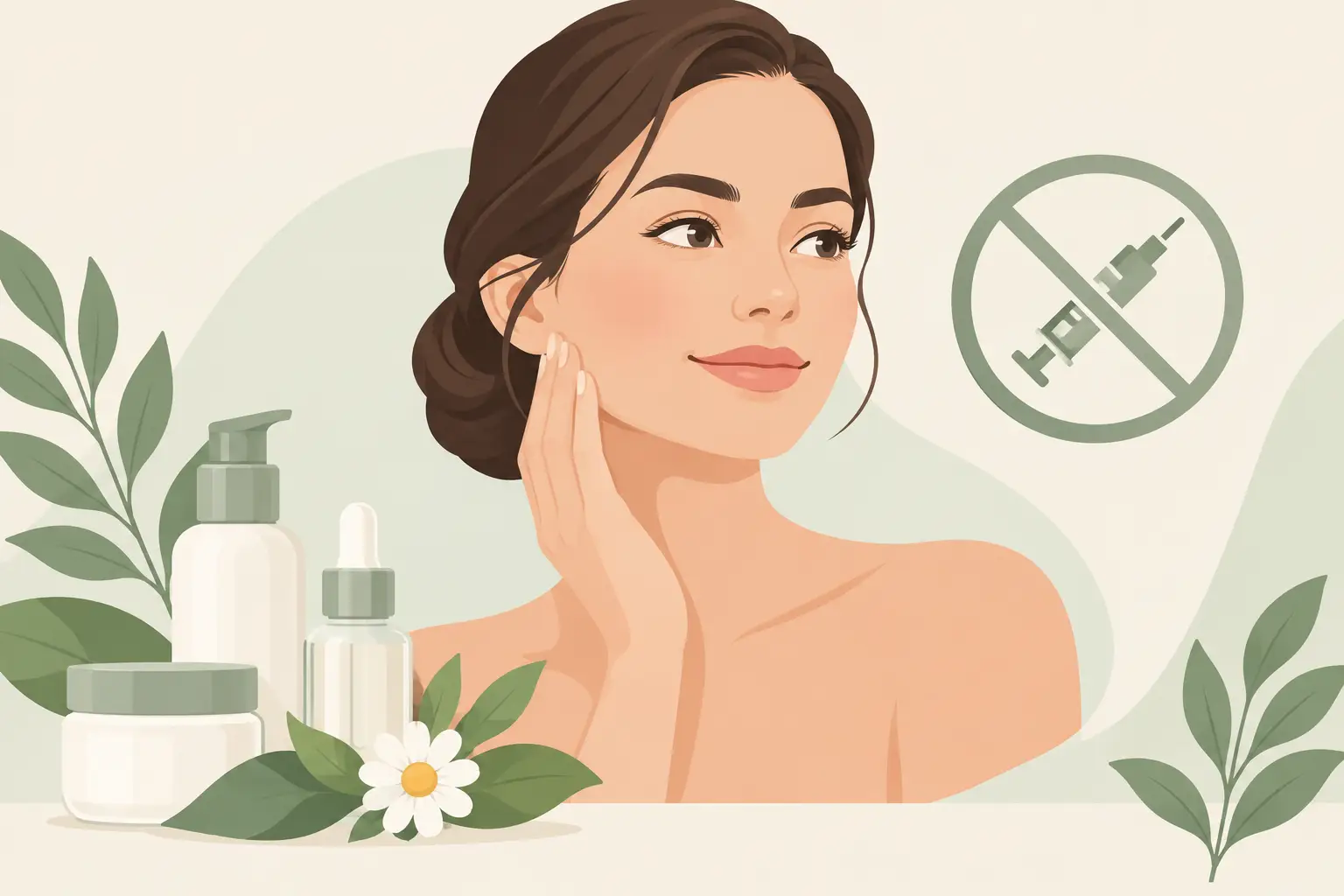
Your face may receive a thoughtful cleanser, a serum chosen with care, and a final layer of moisturizer before bed. Then the routine often stops at the jawline. The ears, neck, and décolleté - skin that moves, bends, and meets the sun each day - are left behind. Clean beauty without fillers offers a quieter way to think about that gap: not more products, more noise, or more promises, but a formula with a clear purpose and a ritual you can return to.
Clean Beauty Without Fillers Is a Philosophy, Not a Buzzword
“Clean beauty” can mean different things depending on who is using the phrase. Sometimes it points to ingredient restrictions. Sometimes it refers to transparency, gentler formulation choices, or a shorter ingredient list. Those can all be meaningful considerations, but the term alone does not tell you whether a product is right for your skin or whether every ingredient has a reason to be there.
At its most useful, clean beauty begins with discernment. It asks what a formula is made to do, which ingredients help it do that work, and what has been left out because it adds little value. It does not require fear of every scientific-sounding word, nor does it assume that botanical ingredients are automatically better for every person.
A no-filler philosophy builds on that discernment. It means choosing ingredients for a purpose rather than using them to inflate an ingredient story, follow a passing trend, or make a jar feel more complicated than it needs to be. The result may still be a sophisticated formula. Simple is not the same as simplistic.
What “Filler” Means in Skincare
In skincare, the word “filler” can be imprecise. A cream needs a structure. It may need emulsifiers to keep oil and water blended, stabilizers to preserve texture, and a preservation system to remain safe through regular use. These are not automatically unnecessary ingredients. They can be essential to the product’s performance, safety, and sensory experience.
The better question is not whether a formula contains only glamorous ingredients. It is whether each ingredient earns its place.
An ingredient may help deliver moisture, protect the formula from spoilage, improve spreadability, or create a finish you will want to use night after night. Those are functional roles. Fillers, in the less helpful sense, are ingredients included without a meaningful contribution to the product’s intended care - or included primarily to create the appearance of excess.
This distinction matters because skincare should not become a test of how few ingredients a label can display. A very short list is not inherently more effective, and a longer list is not inherently indulgent. Purpose, compatibility, and consistency matter more than ingredient-count theater.
The Skin Below the Jawline Has Different Needs
The ears, neck, and chest are not simply an extension of the face. They are highly visible areas with their own daily demands. The neck turns and folds. The skin around the ears is exposed along the hairline and often overlooked after showering. The décolleté is frequently open to daylight, weather, fabric, and friction.
These areas may also receive less regular moisture than the face. Many people cleanse the face carefully, then rinse product down the neck without following with the same nourishing layers. Others apply facial products only where a mirror directs their attention. Over time, the difference in care can become part of the difference in how these areas feel.
This is where a focused formula has value. Instead of treating the neck and chest as an afterthought, it can be made for the reality of thin, exposed, mobile skin. A well-considered nightly cream does not need to make dramatic claims to be worthwhile. Its job can be more grounded: replenish moisture, support a soft and comfortable feel, and invite the habit of extending care beyond the face.
Purposeful Formulas Favor What You Will Actually Use
There is a temptation to equate effective skincare with intensity. A crowded shelf can feel like commitment. A formula packed with the newest active can feel like progress. Yet skin care is often more personal and more practical than that.
If a product stings, pills beneath your clothes, carries an overpowering fragrance, or asks you to monitor a complicated schedule, it may not become part of your life. The most elaborate routine cannot offer much if it remains half-used in a cabinet.
Clean beauty without fillers makes room for a different standard: does this product support a practice you can keep? For the ears, neck, and décolleté, a nourishing nightly application can be enough to create a moment of regular attention. The texture should feel considered. The formula should have a reason for being there. The ritual should fit into the last quiet minutes of the day.
That does not mean every person needs the same ingredients. Sensitive skin, known allergies, and individual preferences should always guide selection. Fragrance, for example, is a personal choice. Some enjoy the sensorial quality it brings; others prefer to avoid it. The thoughtful approach is not to declare one answer universally correct. It is to understand your skin, read the label, and choose with intention.
How to Read a Formula With More Confidence
You do not need to memorize every ingredient name to become a more discerning skincare shopper. Begin with the product’s stated purpose. A rich renewal cream should provide more than a momentary slip. A lightweight daily lotion should feel appropriate for the conditions in which you plan to use it. The product and the promise should make sense together.
Then look beyond the front-label language. Words such as “natural,” “pure,” and “clean” can be helpful signals, but they do not replace a full ingredient list or clear brand philosophy. Consider whether the brand explains its choices plainly. Does it communicate what the formula is designed to support? Does it avoid treating trends as proof? Does it speak with enough restraint to acknowledge that skin changes gradually and differently for everyone?
It can also help to notice whether a formula is trying to do everything at once. More is not always more. When care is focused, it can be easier to understand what you are using and why. RĒMĒMBĒR was created around this principle: a single nightly cream and a specific ritual for the places that receive so much exposure and so little attention.
A Nightly Ritual for Forgotten Skin
After cleansing your face, slow down before you reach for the final step. Warm a small amount of cream between your hands. Apply it along the sides and back of the neck, then smooth it across the chest with gentle, upward strokes. Do not forget the skin around and behind the ears, including the places where glasses, hair, and headphones meet the skin.
There is no need to turn this into a performance. A minute is enough. Breathe. Notice where your shoulders have settled. Let the gesture be less about correcting the passage of time and more about responding to the skin you live in.
During the day, remember that moisturizer is only one part of thoughtful care for exposed areas. Shade, clothing, and daily sun protection remain valuable considerations for the ears, neck, and chest. At night, moisture and a purposeful formula can help restore a sense of comfort after the day’s exposure.
Care That Leaves Room for Real Life
The appeal of clean beauty without fillers is not purity for purity’s sake. It is the relief of choosing less noise. It is knowing that your routine can be refined without being rigid, and that good care can be calm rather than complicated.
Your ears, neck, and décolleté do not need to become another project. They need to be remembered. A small, intentional nightly gesture is a fitting place to begin.