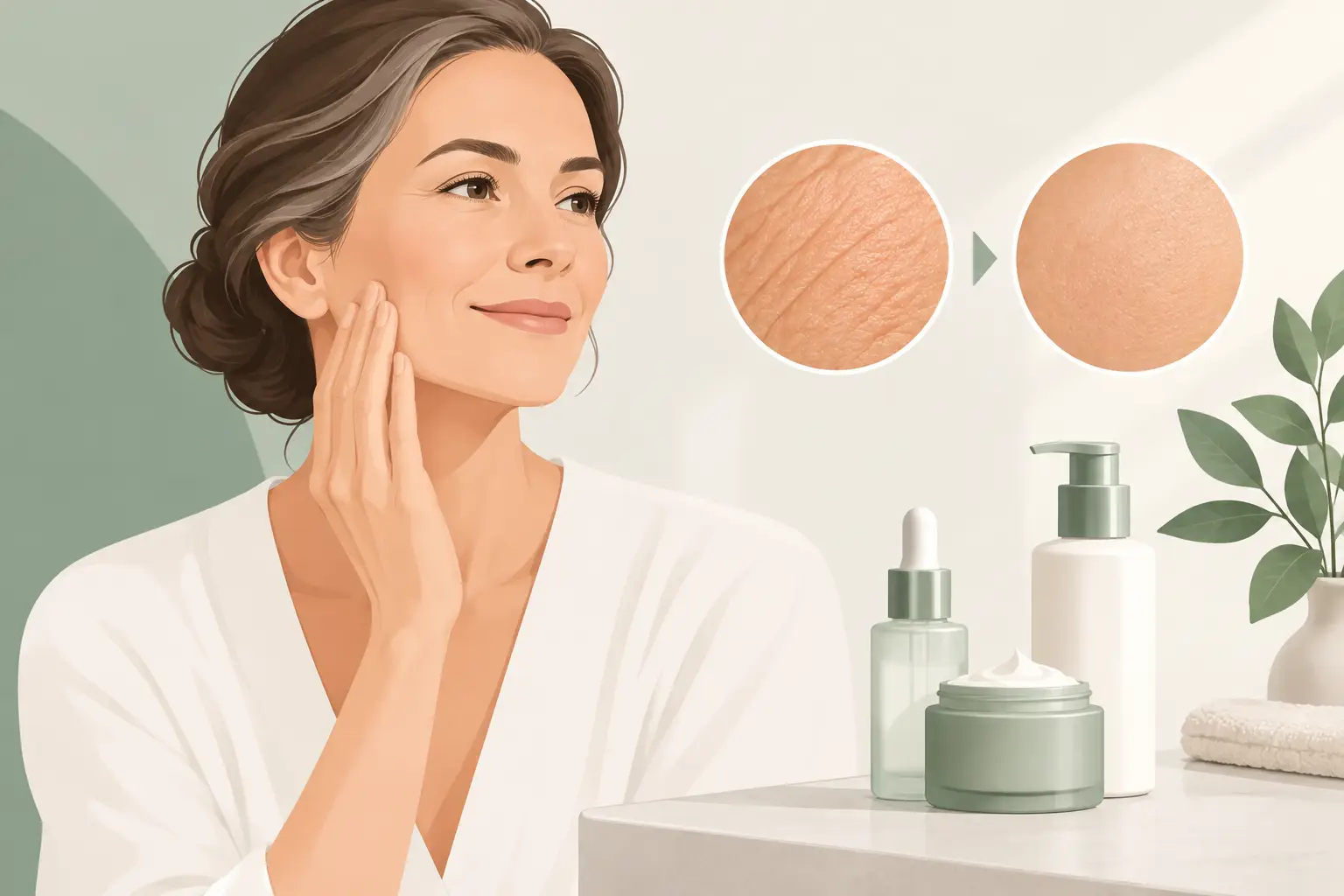
The skin at the base of the jaw can tell a different story than the face. It bends when you look down, meets the sun without much protection, and is often left bare after a carefully considered facial routine. That is why crepey skin routine results are rarely about one dramatic morning in the mirror. More often, they begin as a quieter shift: skin that feels less thirsty, looks a little more rested, and receives the attention it has long been missing.
Crepey texture can be tender territory. It is easy to search for a fast correction, especially when the neck, chest, or ears begin to look more lined, papery, or uneven than the face. But these areas ask for a different kind of care - one rooted in patience, protection, and a ritual simple enough to continue.
Why Crepey Texture Shows Up Below the Face
The neck and décolleté are exposed nearly every day. Sunlight, dry air, shifting temperatures, and friction from clothing all leave their mark. Unlike the face, these areas are frequently skipped during cleansing, moisturizing, and sunscreen application. The ears are often forgotten altogether, despite being exposed whenever hair is worn up or short.
There is also movement to consider. Neck skin stretches and folds as you turn, sleep, read, work, and move through the day. Over time, naturally changing skin structure, repeated exposure, and dehydration can make fine lines and a crepey appearance more visible. The skin here may also feel more delicate than facial skin, which is one reason a crowded regimen of strong, trend-driven actives is not always the most comfortable answer.
Crepey skin is not a personal failure or a sign that you started caring too late. It is skin doing what skin does: responding to time, environment, movement, and the care it receives. A useful routine does not need to fight that reality. It can support the skin with regular nourishment and make room for a more attentive relationship with the areas that carry us forward.
Crepey Skin Routine Results Are Usually Subtle First
The earliest results tend to be felt before they are clearly seen. With consistent moisturizing care, the neck or chest may feel softer after cleansing and less tight at the end of the day. Makeup or body shimmer may sit more smoothly across the upper chest. Fine surface lines can look less pronounced when the skin is well hydrated, particularly in dry weather or after travel.
That does not mean every crease will disappear. A skincare routine cannot erase years of sun exposure, alter the way the neck moves, or promise a particular outcome. Deeper lines, significant laxity, and pronounced textural changes may need a conversation with a qualified dermatology professional if you want to explore medical options. Thoughtful topical care has its own place: helping skin feel conditioned, comfortable, and consistently cared for.
Visible changes, when they happen, are gradual. It can take several weeks of daily use to understand how a product fits your skin, and longer to see whether a steady practice improves the look of dryness or surface texture. The timeline depends on your baseline skin condition, climate, sun habits, age, and the formula itself. Consistency matters more than constantly changing products in search of a sudden reveal.
It can help to notice a few simple markers instead of inspecting every line. Does your neck feel less dry by late afternoon? Does your chest look calmer after a shower? Are you remembering sunscreen more often because this area has become part of your routine? These are meaningful signs that care is becoming a habit rather than an occasional remedy.
A Nightly Practice for the Neck, Chest, and Ears
A good routine for crepey-looking skin should feel like a small extension of washing your face, not another assignment at the end of the night. After cleansing, apply a nourishing cream to the neck and bring it across the décolleté. Use unhurried upward and outward strokes if that feels pleasant, but do not worry about performing a perfect technique. Gentle, regular contact is enough.
Remember the sides and back of the neck, where dryness can go unnoticed. Then lightly smooth any remaining product over the outer ears, including behind them. These small areas are exposed, mobile, and easy to overlook. They deserve the same consideration as the skin at the center of your routine.
RĒMĒMBĒR’s nightly renewal cream was created for this exact gesture: purposeful care for the ears, neck, and décolleté in one restrained, repeatable step. The point is not to layer more products or chase every new ingredient. It is to choose a formula with intention and return to it often enough for the ritual to matter.
If you use prescription treatments, exfoliating acids, retinoids, or other active products in these areas, introduce new care carefully. The neck can be less tolerant than the face, and more is not necessarily better. Apply a small amount first, avoid stacking several potentially irritating products at once, and scale back if skin becomes stinging, red, or persistently uncomfortable. Sensitive skin benefits from a slower pace.
Daytime Protection Shapes What You See Over Time
Nightly moisture can make skin feel supported, but daytime exposure still shapes the long view. The neck, ears, and chest benefit from broad-spectrum sunscreen when they are uncovered, along with shade, hats, higher necklines, or other practical protection when appropriate. This is not about living cautiously. It is about treating these areas as part of the skin you already know to protect.
Sunscreen is especially worth remembering on the tops and outer curves of the ears, the sides of the neck, and the upper chest. These are the places that can receive light without you noticing. If your morning is rushed, keeping your sunscreen step connected to your face routine can make it more likely to happen. Continue from the jawline rather than stopping there.
There is a trade-off in any routine. The more elaborate it becomes, the less likely it may be to survive a busy week, a late flight, or a season when energy is low. A single nourishing nighttime step and reliable daytime protection will often serve you better than an ambitious shelf of products used inconsistently.
How to Track Progress Without Chasing Perfection
If you want a clearer view of your crepey skin routine results, take a photograph in the same natural light before you begin, then leave it alone for a while. Revisit it after six to eight weeks rather than comparing yourself daily under changing bathroom lights. Daily scrutiny tends to magnify what has not changed and overlook the comfort, softness, and steadiness that may already be present.
Pay attention to context, too. Skin often looks more crepey when you are dehydrated, cold, overtired, or fresh from a hot shower. Seasonal shifts can make a routine appear more or less effective from one week to the next. This does not make your observations unimportant. It simply asks for a little generosity in how you interpret them.
The most lasting result may be that the neck, chest, and ears no longer feel like afterthoughts. Slow down for a moment before bed. Breathe. Let care travel beyond the edge of the face, to the skin that has been quietly present through every turn of your head and every day in the sun.