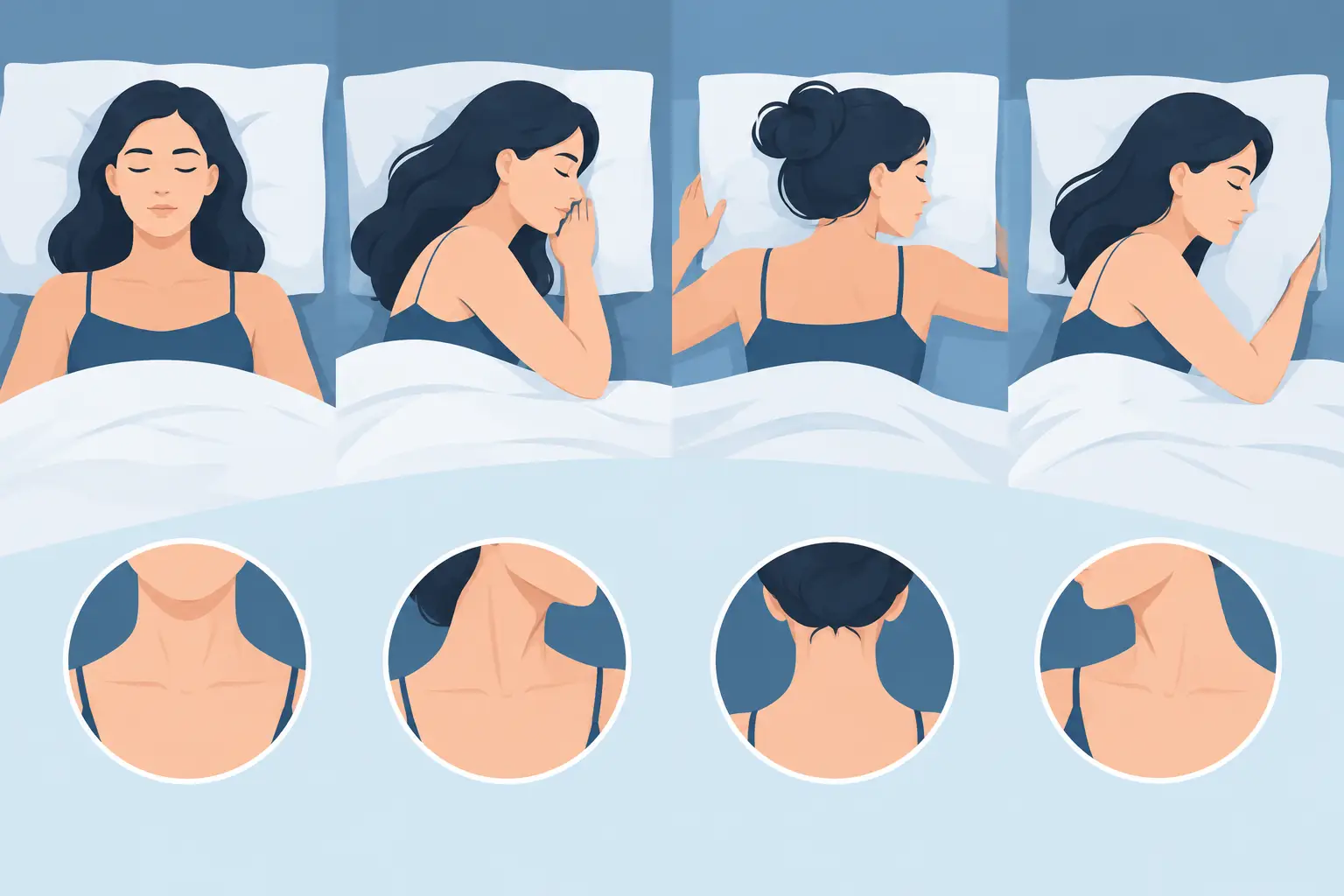
You may know the feeling: you wake, catch sight of your chest in the mirror, and notice a line that was not there the evening before. It is natural to wonder, does sleeping position affect necklines? It can. The way the skin of the neck and décolleté folds, presses, and moves overnight may contribute to temporary creases and, over many years, to lines that linger longer.
But sleep is not something to correct at all costs. A position that allows you to rest deeply matters more than chasing perfectly uncreased skin. The more useful approach is gentle awareness: understand what your skin experiences at night, then give this often-forgotten area consistent, unhurried care.
Does Sleeping Position Affect Necklines? Yes, With Nuance
The short answer is yes, particularly for the upper chest. Side and stomach sleeping can bring the breasts and décolleté together or press the chest into bedding. That compression can leave vertical or diagonal creases in the skin by morning. Back sleeping generally places less folding pressure on the chest, though each body and mattress tells a slightly different story.
A morning crease is not proof of damage. Skin naturally compresses during sleep, just as a pillow can leave an imprint on your cheek or an elastic waistband can mark your waist. Hydration, circulation, and time often allow these temporary lines to soften as the day begins.
The longer view is more nuanced. Repeated mechanical folding may play a role in the appearance of established lines over time, especially when combined with the larger forces that shape skin: sun exposure, natural changes in collagen and elastin, dryness, genetics, hormonal shifts, and smoking. Sleeping position is one piece of the picture, not the whole portrait.
Why the Neck and Chest Show Compression So Easily
The skin below the jawline is asked to do a great deal. It turns with every glance over the shoulder, bends when you read, stretches as you reach, and remains exposed when a face is protected by a hat or sunscreen while the chest is left bare. The décolleté also has less cushion than areas with more underlying fat, so changes in hydration and support can be especially visible there.
This is why a familiar sleep crease can feel surprisingly pronounced. Thin, exposed skin has been pressed between the body and a pillow, mattress, or another area of skin for several hours. If the skin is dry, the fine surface lines may be more apparent. If it has had a long day of sun, wind, air conditioning, or movement, it may be less able to spring back quickly.
None of this calls for alarm. It calls for the same consideration you already offer your face.
The Positions Most Likely to Create Chest Creases
Side sleeping
For many people, side sleeping is comfortable and restful. It can also bring the chest inward, creating a fold at the center of the décolleté. Depending on breast shape, sleepwear, and the firmness of your mattress, the line may appear vertically between the breasts or extend toward one side.
If you are a devoted side sleeper, there is no need to force a dramatic change. Some people find that a supportive body pillow or a small pillow held in front of the body makes the position feel more open and reduces chest-to-chest compression. The goal is comfort first, with less folding where it comes naturally.
Stomach sleeping
Stomach sleeping tends to create the most direct pressure on the chest, while also requiring the neck to turn to one side for a long stretch of time. It may leave more noticeable chest creases and can be uncomfortable for some necks and shoulders.
That said, sleep habits are personal. Trying to change your position can interrupt rest, and restless sleep has its own costs. If stomach sleeping is the only way you truly sleep well, focus on the care within your control rather than turning bedtime into a project.
Back sleeping
Back sleeping usually allows the chest to rest with less compression. For people who are comfortable in this position, it may mean fewer morning décolleté creases. It is not a requirement, nor is it universally comfortable, especially for people with snoring, reflux, back discomfort, or other sleep concerns.
A pillow that supports the head without pushing the chin sharply toward the chest can help the neck feel more at ease. Think of alignment, not perfection. The best pillow is not the one that promises a new you. It is the one that helps you wake rested and comfortable.
What Helps More Than Chasing the Perfect Position
Because neckline changes are influenced by so much more than sleep, a simple daily practice is more meaningful than a perfect nighttime posture. Protect the neck and chest from sun exposure as deliberately as you protect the face. This is especially relevant for open collars, walks, driving, and the ordinary bright moments that add up over time.
At night, cleanse away the day gently, then apply moisture to the ears, neck, and décolleté with slow upward and outward strokes. A nourishing cream cannot erase every fold created by sleep, and no thoughtful skincare brand should suggest otherwise. It can, however, support skin that feels comfortable, conditioned, and cared for - skin better prepared for the daily movement and exposure it encounters.
RĒMĒMBĒR was made for this exact extension of care: the skin around the jawline, along the neck, and across the chest that so often receives whatever remains on the fingertips after the face is finished. A nightly ritual need not be elaborate. The value is in returning to these areas consistently.
Fabric can make a modest difference, too. Smooth bedding may reduce surface friction compared with rougher materials, though it cannot eliminate the compression that happens in a side or stomach position. Be wary of any sleep accessory presented as a guaranteed solution. Comfort, clean bedding, and a ritual you will actually keep are more valuable than a drawer full of corrections.
When a Morning Line Is Just a Morning Line
Give temporary creases time before judging them. Drink water, move through your morning, and let the skin settle. A line that softens within hours is a normal response to pressure. Lines that remain visible are not a personal failing or a sign that you slept incorrectly. They are part of the individual way skin records life: expression, light, movement, weather, and time.
If a new mark does not fade, changes in color or texture, feels persistently itchy or painful, or otherwise concerns you, a board-certified dermatologist can offer personal guidance. Skincare is a meaningful daily practice, but it should sit alongside appropriate medical care when something feels unusual.
Tonight, rather than negotiating with every crease, slow down. Breathe. Let your preferred sleeping position be a place of rest, then take a quiet moment to care for the skin you usually forget. Consistency has a way of becoming its own kind of comfort.