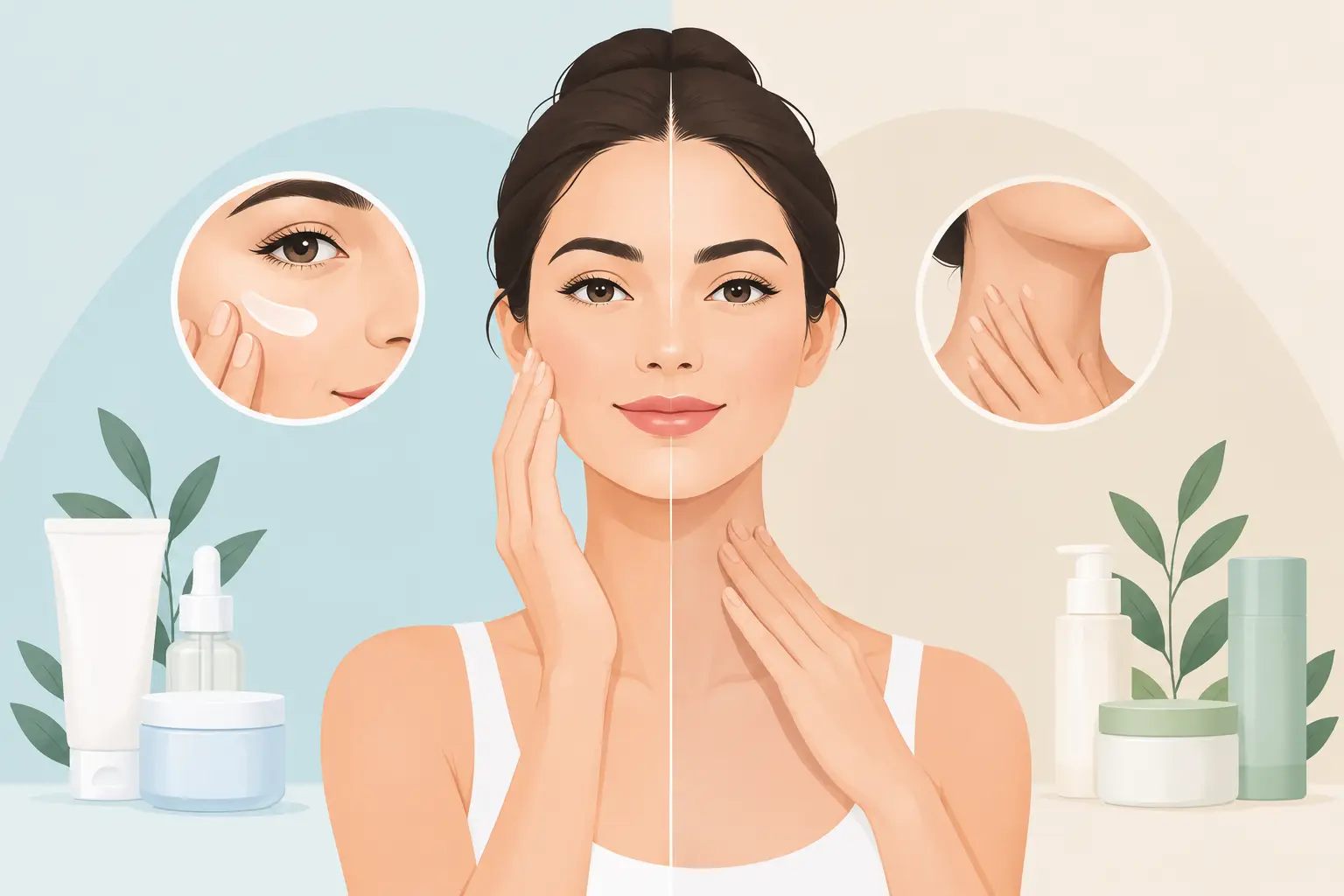
Your face may receive a thoughtful routine each morning and evening, while your neck gets whatever is left on your hands. Facial skincare versus neck skincare is not a question of which area matters more. It is a question of recognizing that the skin below the jawline lives a different kind of day.
The neck, ears, and décolleté are exposed to light, weather, friction, and the small movements that make up a life. They turn toward a conversation, bend over a book, rest against a collar, meet the sun through a car window. Yet these areas are often absent from the ritual we reserve for the face.
A little more attention is not about chasing perfection. It is about bringing continuity to care.
Facial Skincare Versus Neck Skincare: Why They Differ
Facial skin is not uniform, of course, but most face-focused routines are built around familiar concerns: cleansing away the day, balancing oil, supporting hydration, and tending to the visible effects of exposure. The face is where we look first, so it is where many of us learn skincare first.
The neck asks for a slightly different approach. Its skin is generally thinner than the skin on much of the face, with fewer oil glands. That can mean it feels dry more readily and may not respond happily to the same intensity of products used elsewhere. The chest and ears bring their own considerations. The chest is broad and frequently exposed, while the ears have delicate contours that are easy to skip entirely.
Movement matters, too. The neck is in near-constant motion. It stretches, folds, turns, and supports the head all day long. A care practice for this area should respect that reality rather than treat it as an afterthought or an extension of the forehead.
This does not mean every facial product is unsuitable for the neck. Many gentle, well-formulated moisturizers can be used beyond the face. But it does mean that a routine designed only around facial needs may leave something out: the richer, more comforting, and more deliberate care these exposed areas often appreciate.
The Exposure We Tend to Forget
The neck and décolleté can receive substantial incidental sun exposure. A walk to lunch, time in the garden, or an open-necked shirt can add up over years. Ears are exposed, too, especially around the upper edge and behind the lobe, yet they are rarely included in a morning application of sun protection or an evening moisturizing ritual.
Daily exposure is only one part of the picture. Fragrance can linger at the base of the throat. Jewelry, scarves, collars, hair products, and even the repeated pressure of looking down at a phone all create a more active environment than we might realize.
That does not call for alarm or a shelf full of corrective products. It calls for awareness. Sun protection during the day, especially on exposed skin, remains a practical foundation. At night, a simple nourishing cream can help make this often-forgotten territory part of the same rhythm as washing your face and brushing your teeth.
A Different Standard for Active Ingredients
Skincare culture often rewards escalation. A stronger percentage, a newer acid, one more step. But the neck is a useful place to practice restraint.
If you use potent exfoliating acids, retinoids, or other active treatments on your face, it is wise to introduce them carefully below the jawline, if at all. What works well on the cheeks may feel irritating on the neck. Sensitivity can show up as stinging, persistent dryness, flaking, or redness. These are not signs to push through. They are information.
There is no virtue in making the neck endure a facial routine it does not need. For many people, steady moisture and a supportive barrier-focused formula are more valuable than frequent experimentation. If you are unsure about a particular ingredient, patch test first and consider speaking with a dermatologist, particularly if you have a skin condition or a history of sensitivity.
The most useful routine is often the one you can return to without negotiation.
How to Extend Your Nightly Ritual
The transition from face care to neck care can be quiet and uncomplicated. After cleansing your face, pause before reaching for the next thing on your evening list. Apply your chosen cream from the base of the neck upward, using light, unhurried strokes. Continue over the sides of the neck, behind the ears, across the outer ears, and down the center of the chest if it is comfortable for you.
There is no need for aggressive massage or a prescribed number of motions. The point is coverage, consistency, and a moment of attention. Use enough product that your hands can move without tugging at dry skin, then let the ritual be gentle.
A dedicated formula can make this easier to remember because it gives the practice a clear place in the evening. RĒMĒMBĒR was created around this very idea: purposeful nightly care for the ears, neck, and décolleté, without turning the ritual into a complicated system.
If you already have a facial moisturizer you enjoy, start there. What matters first is the habit. A product made for these zones may be a considered next step when you want a more focused layer of care.
Consistency Has a Softer Kind of Power
A neck-care routine will not erase the evidence of a life well lived, nor should it promise to. Skin changes. Bodies change. The aim is not to hold time still.
Instead, consistent care can help skin feel more comfortable and replenished. It can reduce the recurring feeling that an area has been overlooked. And it can shift the way you see your own routine, from a task performed for the mirror to an act of consideration for the whole visible self.
This is especially meaningful as routines become simpler. Many people eventually find that they do not want a dozen steps and competing instructions. They want a few products they trust, used with enough regularity to become second nature. The neck belongs in that kind of routine because it does not ask for spectacle. It asks not to be forgotten.
What About the Jawline?
The jawline is the natural bridge between face and neck, and it deserves to be included rather than treated as a hard border. Bring your evening moisturizer past the chin and along the jaw before moving down the neck. This creates a more complete application and avoids the familiar stopping point where facial care abruptly ends.
If breakouts are a concern around the chin or jaw, choose products according to your skin’s needs and pay attention to how they feel over time. A dedicated neck cream may be best applied just below the jawline in that case, while your face receives its usual formula. Care can be tailored. It does not have to be all or nothing.
What About the Décolleté?
The décolleté often receives the least care precisely because it is farther from the mirror. Still, it can be one of the most exposed areas, especially in warm months or near windows. Extending a nourishing evening cream down the chest is a small gesture with a practical purpose.
In the morning, consider where the skin will be visible before you leave the house. A broad application of sunscreen to exposed neck, chest, and ears belongs beside facial sun protection, not after it. Hats, collars, and shade can add another layer of consideration without making life feel overly managed.
Make Room for the Skin You Usually Forget
The best ritual is not the longest one. It is the one that feels possible on an ordinary Tuesday, when you are tired and ready for the day to be over. Keep your neck and décolleté cream where you will see it. Apply it after your facial routine, not someday when you have more time.
Slow down for those few seconds. Breathe. Let your hands travel beyond the familiar borders of facial care.
The skin at your neck, ears, and chest has been present for every sunlit drive, every turned head, every season. It is worthy of the same quiet remembrance you give your face.