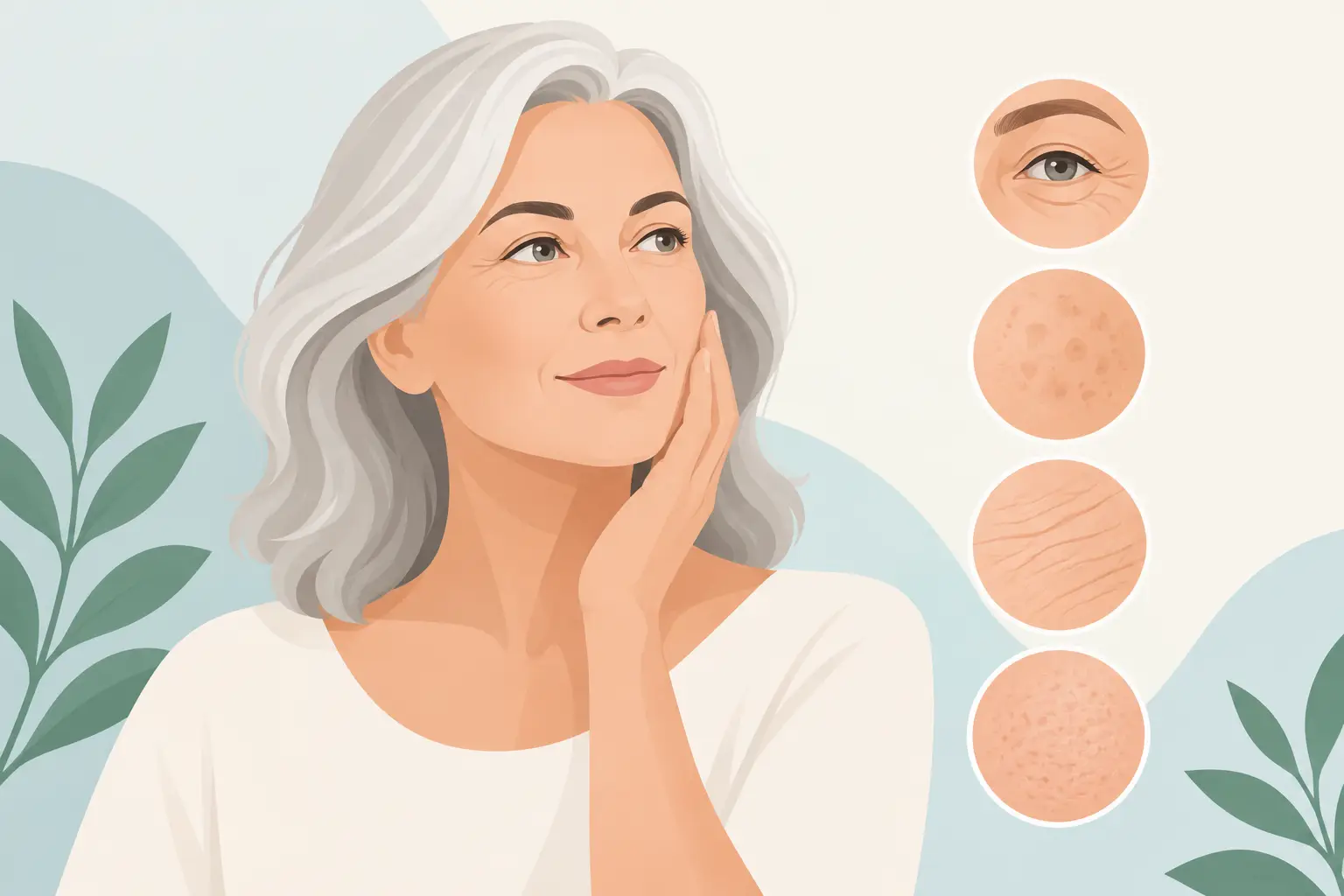
Postmenopausal skin can feel unfamiliar in quiet ways. The moisturizer that once felt sufficient seems to disappear by noon. A neckline that tolerated sun and fragrance for decades may become easily irritated. For many people, this guide to postmenopausal skin changes begins not with a dramatic shift, but with the realization that skin now asks for a different kind of attention.
This is not a failure of your routine or something to fight. It is a natural transition shaped by changing estrogen levels, accumulated exposure, genetics, health, and daily habits. The most supportive response is usually not a crowded shelf of products. It is a gentler, more consistent practice that cares for the skin you see and the skin you may have been forgetting.
Why skin changes after menopause
Estrogen has a meaningful role in skin. It supports collagen production, hydration, elasticity, and the skin barrier, which helps keep moisture in and irritants out. As estrogen declines during and after menopause, the skin may produce less oil and hold less water. Collagen production also slows, while years of sun exposure become more visible.
The result varies from person to person. Some notice dryness first. Others see a change in texture, fine lines, crepiness, sagging, sensitivity, or slower recovery after irritation. Skin may bruise more easily or feel thinner, particularly on the hands, forearms, neck, and chest.
None of these changes happen in isolation. Sleep, stress, medications, climate, smoking history, nutrition, and how much unprotected sun your skin has received can all influence what you see. That is why a thoughtful routine should be responsive rather than rigid.
The changes you may notice most
Dryness that does not resolve with one application
Postmenopausal dryness often reflects a weakened barrier, not simply a lack of water on the surface. When the barrier is less efficient, moisture evaporates more readily and skin can feel tight, rough, itchy, or suddenly reactive.
A richer cream can help, but technique matters too. Apply moisturizer to slightly damp skin after bathing, then give it a moment to settle before dressing. Very hot water, long showers, and fragranced body washes can make dryness more persistent, especially in winter or dry indoor air.
Fine lines, crepiness, and less spring
Collagen and elastin give skin much of its structure and bounce. Their gradual decline can make the skin look less firm, while repeated movement and gravity become more apparent around the mouth, jawline, neck, and chest.
There is no topical product that can stop this process entirely, and it is worth being skeptical of anyone who promises otherwise. But daily moisturization, sun protection, and careful use of evidence-informed ingredients can support a smoother, more comfortable appearance over time. Consistency matters more than intensity.
Increased sensitivity
Skin that once handled exfoliating acids, strong retinoids, or heavily scented products may become less forgiving. Stinging, redness, flaking, or small patches of irritation can be signals that the routine has become too demanding for the skin's current needs.
This does not mean all active ingredients are off limits. It means introducing one change at a time, starting slowly, and allowing your skin to guide the pace. A simpler routine often makes it easier to understand what is helping and what is causing strain.
Changes below the face
The ears, neck, and décolleté are often exposed to the same daylight as the face, yet they receive far less care. Their skin can be thinner, and the neck is in near-constant motion. Years of driving, walking, gardening, and simply living in the sun may show up as dryness, uneven tone, fine lines, or a texture that feels delicate.
These areas do not need punishment. They need to be included. If you apply a serum or cream to your face, extend what is appropriate down the neck and across the chest. Remember the outer ears as well, particularly their exposed edges and folds. Use a light touch rather than pulling or rubbing the skin.
A quieter approach to postmenopausal skincare
A well-chosen routine should feel like care, not homework. Begin with a mild cleanser that leaves skin comfortable rather than squeaky-clean. In the morning, moisturize as needed and use broad-spectrum sunscreen on exposed skin, including the ears, neck, chest, and backs of the hands. Reapply when you are spending extended time outdoors.
At night, slow down. Cleanse away the day, then use a nourishing moisturizer while your skin is still slightly damp. If you use a retinoid, exfoliant, or vitamin C product, think of it as one part of the ritual rather than the entire ritual. More is not always better. Alternating active nights with restorative nights can help preserve comfort and reduce irritation.
For the ears, neck, and décolleté, a dedicated nightly cream can make the practice easier to keep. RĒMĒMBĒR was created around this very idea: one intentional step for the thin, exposed, mobile skin below and around the jawline. The point is not to chase a different face in the mirror. It is to give these overlooked places the same consideration you already offer your face.
Ingredients and habits worth considering
Humectants such as glycerin and hyaluronic acid draw water toward the skin. Emollients soften and smooth its surface, while occlusive ingredients help reduce moisture loss. A moisturizer that combines these functions is often especially helpful when dryness is a primary concern.
Ceramides and other barrier-supporting lipids can be useful for skin that feels reactive or depleted. Peptides may be a welcome addition for those seeking a more refined texture, though patience is necessary. Retinoids can support cell turnover and collagen over time, but they should be introduced carefully and may not suit very sensitive skin without professional guidance.
Daily sunscreen remains one of the most meaningful long-term habits. It cannot erase prior exposure, but it helps prevent additional UV-related changes. Seek shade, wear a hat with a brim when practical, and do not reserve sun protection for beach days. Incidental exposure adds up, especially across the chest and sides of the neck.
Lifestyle care has a place here too. Adequate sleep, movement, hydration, and not smoking all support the body systems that influence skin. Still, avoid turning skincare into a moral scorecard. You do not need to earn care through perfect habits. A few steady actions, repeated with kindness, are enough to make a difference.
When to ask a dermatologist
Dryness and gradual changes in texture are common after menopause, but not every skin change should be assumed to be hormonal. Make an appointment with a dermatologist for a new or changing mole, a spot that bleeds or does not heal, persistent itching, an unexplained rash, sudden bruising, or a rapidly changing area of pigment.
A dermatologist can also help when acne, rosacea, eczema, or sensitivity becomes difficult to manage. If you are considering prescription treatments, hormone therapy, or a stronger retinoid, individualized advice is particularly valuable. Your skin history, health conditions, and medications all matter.
The skin after menopause is not asking to be corrected into its former self. It is asking to be met where it is now. Tonight, after you care for your face, pause at the neck, chest, and ears. Breathe. Let one small, deliberate gesture become a way of remembering the skin that has carried you through every season.