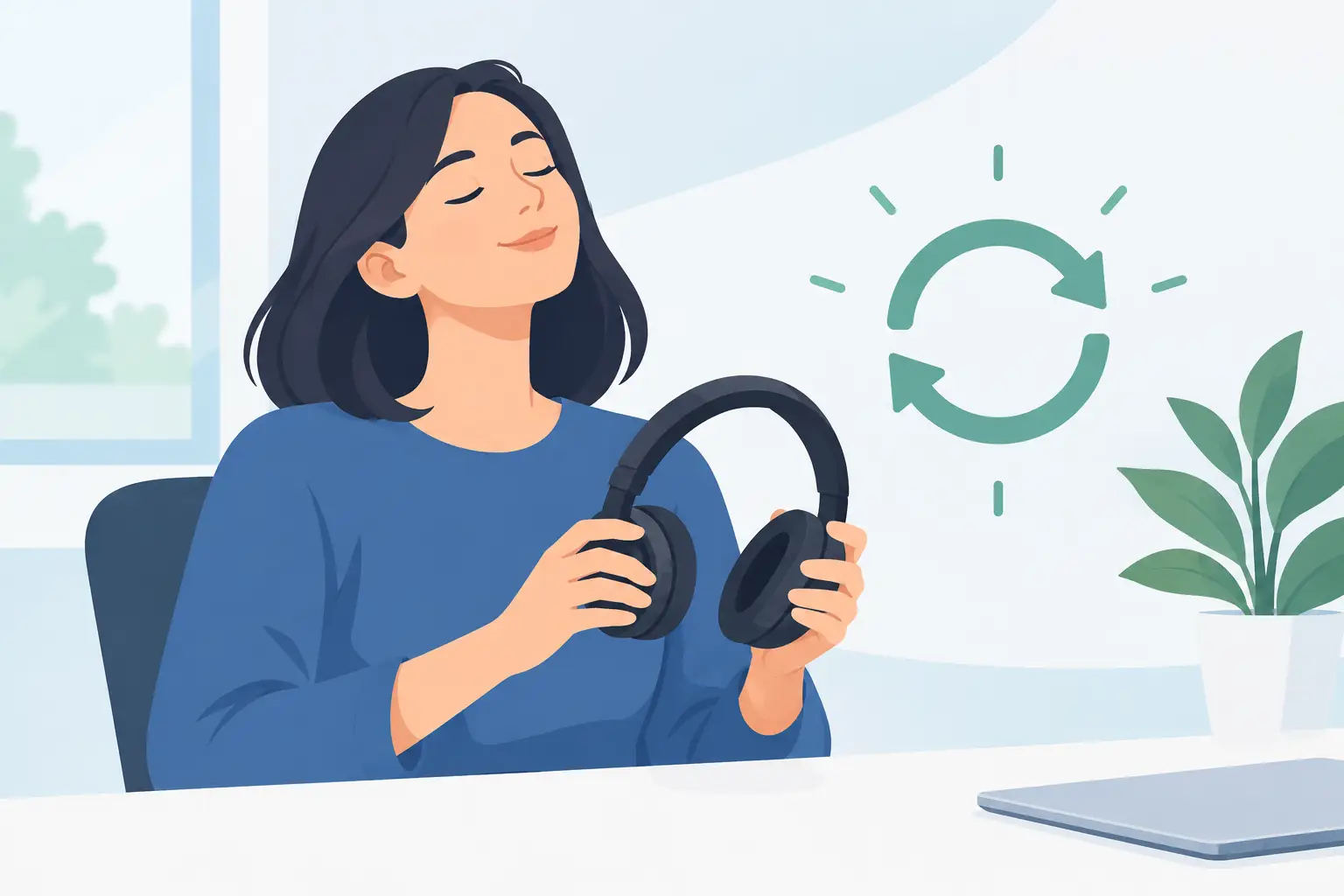
The first sign is often subtle: a warm outer ear, a tender spot where a cushion has rested, or the instinct to pull your hair back because the skin along your neck suddenly wants air. A headset reset for relief after long use of headphones is not about giving up music, calls, or the small privacy of a favorite podcast. It is a brief return to comfort for the skin and muscles that have been holding more than we realize.
Headphones have become part of the texture of modern life. They accompany workdays, walks, flights, workouts, and late-night listening. Yet the parts of us they touch most directly - the ears, the jawline, the neck, and sometimes the upper chest - rarely receive a deliberate moment of care afterward.
Why Headphones Can Leave You Feeling Worn Down
Even a well-designed headset creates contact. Over-ear styles rest against the outer ear and surrounding skin; on-ear styles apply more direct pressure; earbuds sit at the entrance of the ear and can make some people more aware of warmth or sensitivity. Add glasses, jewelry, a ponytail, or a full day of screen posture, and a small point of contact can begin to feel surprisingly insistent.
The effect is not only physical pressure. Headphone use can invite us to stay still longer than intended, with the chin angled forward and shoulders slowly rising toward the ears. The neck is a mobile area of thin, exposed skin, constantly folding, turning, and meeting the collar of a shirt or the edge of a headset. It asks for a different kind of attention than the center of the face.
There is a practical distinction worth keeping in mind: ordinary temporary warmth or an impression from a headset is common. Persistent pain, swelling, broken skin, drainage, hearing changes, or symptoms that do not settle deserve guidance from a qualified medical professional. A reset is gentle care, not a substitute for medical attention.
A Five-Minute Headset Reset
The most useful reset is simple enough to repeat. Begin by taking the headphones fully off, rather than moving one side behind an ear. Let both ears be uncovered. If you have been in a warm room, near a screen, or under a hat, spend a minute in a cooler, quieter space. Breathe normally and allow your shoulders to lower.
With clean hands, lightly trace the area around the outer ear, along the jaw, and down the sides of the neck. There is no need for deep massage or forceful rubbing. Think of it as noticing where the day has gathered. A slow turn of the head from side to side, followed by a gentle look downward and back to neutral, can ease the fixed feeling that often follows long stretches of listening or calls.
If the skin feels warm, a clean, cool - not icy - washcloth can be held against the outer ear and neck for a moment. Pat dry rather than rubbing. Then leave the area free of headphones for as long as your day allows. A few minutes between meetings may be enough to interrupt the cycle of pressure and heat.
Care for the skin around the ears, not inside them
The outer ear is skin, and it can become dry or irritated by weather, cleansing products, hair products, and repeated friction. After washing, apply a modest amount of moisturizer around the ear, behind it, and along the neck if the skin feels dry. Keep skincare out of the ear canal. It is a small boundary, but an important one.
This is also a good moment to notice what reaches the area accidentally. Fragranced hair sprays, styling products, sunscreen left sitting in the folds behind the ears, and residue on headphone pads may all be unwelcome when skin is already feeling sensitized. Gentle cleansing of the outer ear and regular cleaning of headphone surfaces can make the ritual feel more considered.
Make Relief Part of Your Evening Care
A headset reset becomes more restorative when it joins a familiar nightly rhythm. After cleansing your face, do not stop at the jaw. Bring your attention down the neck and across the décolleté, then include the ears: the lobes, the delicate skin in front of them, and the often-forgotten area behind them.
These zones are exposed to the same sun, dry air, temperature shifts, and daily movement as the face. Still, they are often treated as an afterthought. Over time, consistency matters more than an elaborate rotation of products. A single purposeful cream, applied with clean hands and a light touch, can turn the last minutes of the day into care for the skin you usually forget.
RĒMĒMBĒR was created for this exact territory - the ears, neck, and décolleté that live just beyond the usual skincare boundary. The point is not to add noise to your routine. It is to extend the attention you already give your face to the places that have quietly been carrying exposure, movement, and contact all along.
If you wear headphones late at night, consider the order. Remove them first, cleanse away any sweat or residue if needed, and let the skin settle before applying your evening cream. A heavy layer immediately beneath a tight headset may not feel comfortable for everyone. It depends on your skin, the product texture, and how soon you plan to put the headphones back on. When possible, allow your skin a little open air.
Adjust the Habit, Not Just the Aftercare
Relief after long headphone use is partly about what happens afterward, but fit and routine shape the experience too. Headphones that feel perfect for a 20-minute walk may feel different during a three-hour video-call block. Check whether the band is adjusted evenly and whether the ear cushions are worn, stiff, or collecting product residue. A headset does not need to feel painfully tight to create a pressure point over time.
Small pauses are more effective than waiting until discomfort is pronounced. Between calls, take the headset off completely. Change your posture. Let your neck lengthen rather than reaching toward the screen. If you regularly wear over-ear headphones with glasses, experiment with small adjustments to where the arms of the glasses and the cushions meet. Sometimes comfort is less about a new device and more about releasing one crowded point of contact.
For earbuds, cleanliness and fit matter particularly. Use the appropriate tip size, keep the exterior clean according to the manufacturer’s instructions, and avoid pushing them farther in when they feel irritating. If you find yourself turning up the volume because outside noise is distracting, a quieter environment or headphones with better passive isolation may be kinder to your listening habits than simply listening louder.
A Small Practice of Remembrance
There is something revealing about the places we overlook. We moisturize the face we see in the mirror, then move quickly past the ears that hold our glasses, the neck that turns toward every person and screen, and the chest that meets daylight each morning. Headphones make that neglect easier to notice because their contact is so literal.
Let the moment you remove them be a cue. Put them down. Unclench your jaw. Smooth a little care along the edges of your face and into the skin below it. Not because every sensation needs fixing, but because comfort is worth returning to, quietly and often.