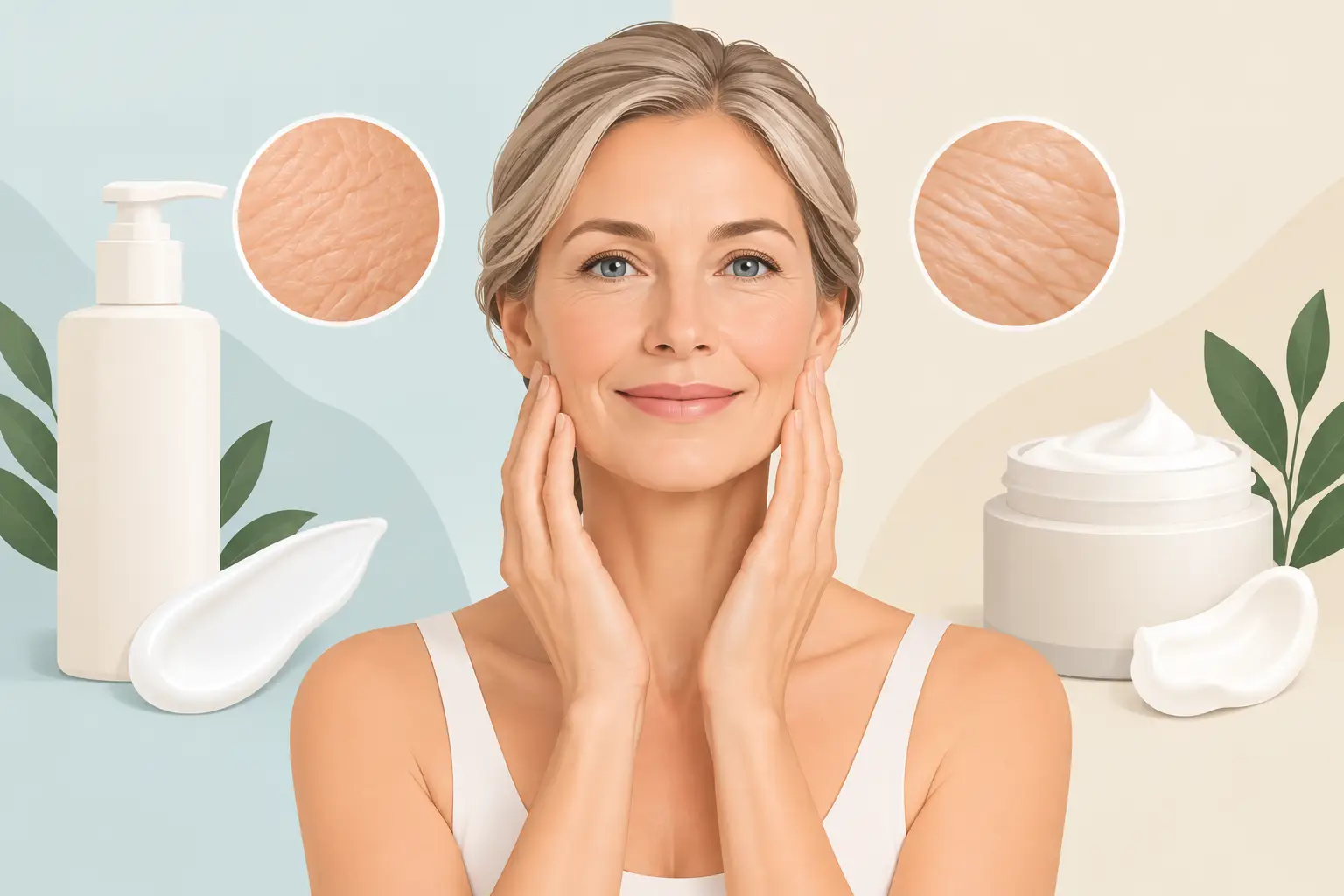
The question of lotion versus cream for crepey skin often appears when the neck, chest, or upper arms begin to look a little less smooth than they once did. Skin can seem finely wrinkled, papery, or less resilient, especially after sun exposure, seasonal dryness, or years of giving the face more attention than the skin below it. The answer is not that one texture is always better. It is about choosing the texture you will use consistently, and one that gives thin, exposed skin the comfort it is asking for.
Crepey-looking skin deserves a gentler frame than a battle to be won. Slow down. Notice where your skin feels dry after cleansing, where clothing rubs, and where movement creates repeated folds. Then choose care that feels considered enough to return to each evening.
What gives skin a crepey appearance?
Crepey skin is not simply dry skin, though dryness can make its texture more visible. It is often a combination of changes in the skin's moisture levels, surface barrier, structure, and elasticity. Time, ultraviolet exposure, environmental stress, genetics, hormonal shifts, and ordinary movement all play a part.
The ears, neck, and décolleté are especially easy to overlook. They receive much of the same daylight and weather as the face, yet they are frequently skipped during cleansing, moisturizing, and sun protection. The neck also moves constantly - turning, looking down, stretching, and resting against collars or bedding. Its skin has its own needs, and it benefits from being treated as more than an afterthought.
A moisturizer cannot erase every cause of crepey texture. What it can do is support a more comfortable, hydrated-looking surface and help seal in water after cleansing. Used regularly, it becomes part of a broader practice of caring for skin with patience rather than chasing a dramatic overnight change.
Lotion versus cream for crepey skin: the real difference
Lotions and creams are both moisturizers, usually made by blending water, humectants, emollients, and ingredients that help reduce moisture loss. The difference is largely in their balance. Lotions typically contain more water and feel lighter, while creams tend to be richer and more cushioning.
A lotion may be the right choice when you dislike a heavier finish, live in humid weather, or want something that spreads quickly over larger areas. It can be especially pleasant in the morning, beneath clothing, or on skin that is only mildly dry. The best lotion is one you enjoy using enough to apply beyond your face.
A cream is often better suited to skin that feels persistently dry, tight, or rough, particularly at night. Its richer texture can leave a more protective, conditioned feel on the surface of the skin. For the neck and chest, where delicate skin is exposed by day and often forgotten by night, this extra comfort can make a meaningful difference to the ritual.
Texture alone does not determine quality. A light lotion can be thoughtfully made, and a thick cream can be more waxy than nourishing. Rather than assuming that richer is always better, pay attention to how your skin feels an hour later and again in the morning. Does it feel calm and comfortable? Or does it still feel thirsty, coated, or irritated? Your skin's response is more useful than the label on the jar.
Why a cream often makes sense at night
Night is a natural moment to choose a cream for crepey-looking skin. There is no rush to dress, no need to account for heat or makeup, and a little more time to give neglected areas their due.
After cleansing, gently pat the ears, neck, and chest until they are no longer dripping wet. Apply cream while the skin still holds a trace of moisture. Use upward, unhurried strokes along the neck, then smooth across the chest and around the outer ears. There is no need for aggressive massage. Thin skin does not require force to receive care.
A cream's slower, more enveloping finish can also make the habit easier to remember. It creates a small pause at the end of the day: breathe, look up from the sink, and care for the skin you usually forget. This is part of why RĒMĒMBĒR centers its nightly ritual on the ears, neck, and décolleté rather than asking one facial product to serve every part of the body.
If a rich cream feels uncomfortable, however, do not force it. A lotion used faithfully is more useful than a cream left unopened. You might use lotion during warmer months and move to cream when indoor heat, cold weather, or drier skin calls for more support.
Look beyond the word on the label
Whether you choose a lotion or cream, consider the formula's purpose. Humectants, such as glycerin, help draw water toward the skin's outer layers. Emollients soften and smooth the feel of a rough surface. Occlusive ingredients help slow the escape of moisture. A thoughtful moisturizer often combines these functions rather than relying on a single fashionable ingredient.
For skin that is becoming more reactive or dry, restraint can be welcome. Fragrance, strong exfoliants, and a crowded rotation of new actives may not be the best place to begin. This does not mean every active ingredient is wrong for every person. It means that when skin feels fragile, a simple and well-tolerated moisturizing practice is a sensible foundation.
Pay attention to irritation. Burning, itching, persistent redness, or a rash are signs to stop using a product and speak with a dermatologist or other qualified clinician, particularly if the change is new or severe. If you use prescription treatments or potent exfoliating products, ask how to layer them without overburdening the skin.
Moisturizer works best beside daily protection
For crepey texture in sun-exposed areas, moisturizer is only one part of the picture. The neck, chest, and ears benefit from broad-spectrum sunscreen during the day, along with shade, hats, and clothing when practical. These measures do not need to become a fearful routine. They are a form of respect for skin that has spent years meeting the light before the rest of you arrives outside.
Apply sunscreen to the back and sides of the neck, the upper chest, and the ears if they are exposed. Many people remember the center of the face and leave these places behind. A few extra seconds can turn prevention into an ordinary habit rather than an occasional correction.
Hydration, adequate nourishment, sleep, and not smoking also support skin health in ways no single jar can replace. Still, daily life is not a perfect checklist. Begin where you are. A nightly cream and a morning sunscreen habit are quiet, realistic places to start.
A ritual worth repeating
The best choice in lotion versus cream for crepey skin is usually the one that matches both your skin and your life. Choose lotion when you want lightness and ease. Choose cream when your skin needs more cushion, especially after evening cleansing or during dry seasons. Adjust without judgment as the weather, your routine, and your skin change.
What matters most is not an elaborate shelf of products. It is the decision to include the ears, neck, and chest in the care you already give your face. Tonight, let your hands travel a little farther. That small act of remembrance can become one of the kindest parts of your day.