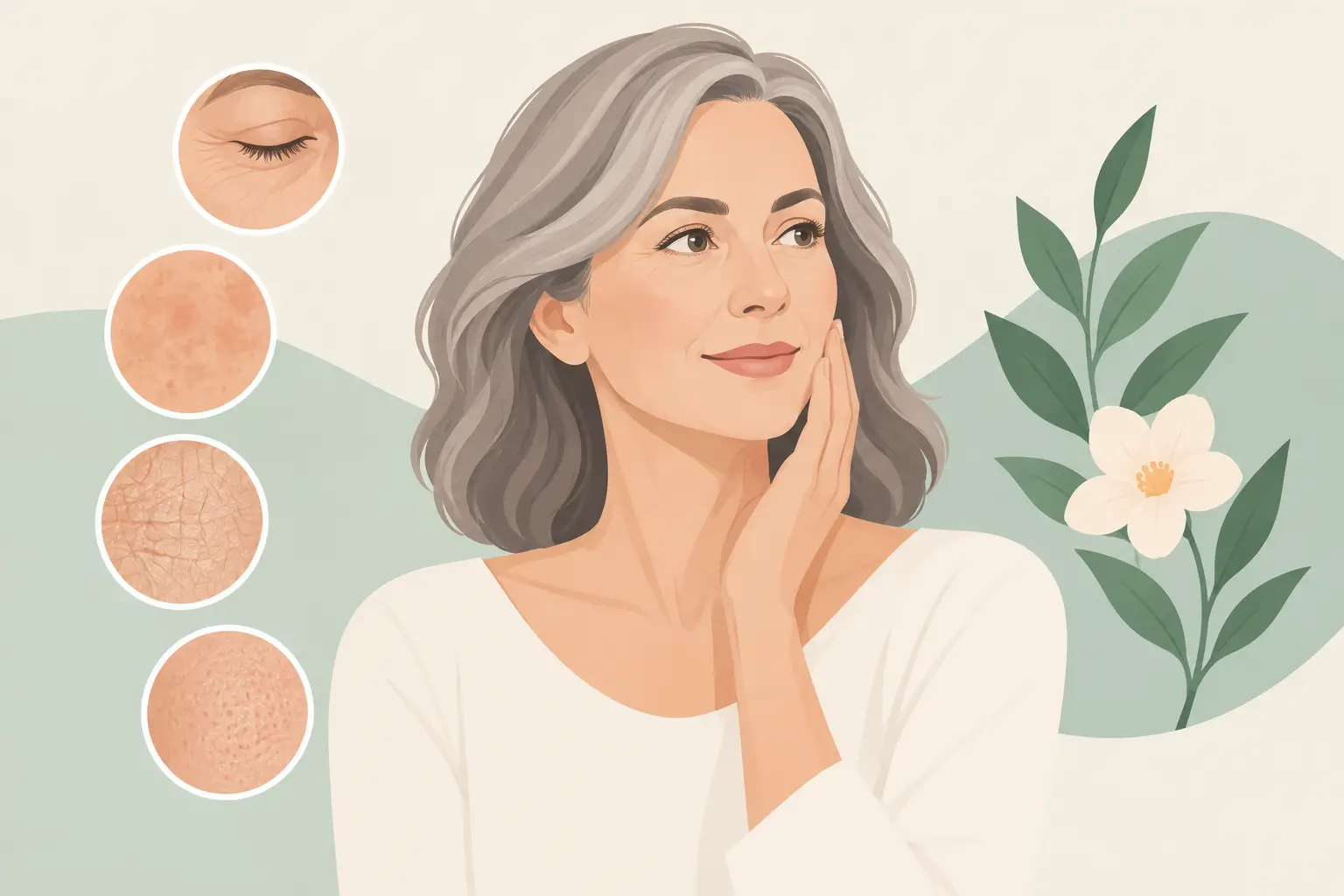
The mirror may show the change first: makeup sitting differently, a neck that feels unexpectedly dry, a chest that seems more easily irritated by a familiar fabric or fragrance. Menopause skin changes are not confined to the face, and they are not a sign that you have failed to care for yourself. They are a response to a meaningful shift within the body, one that calls for more patience than panic.
For many people, this is also the moment to notice the skin below the jawline. The ears, neck, and décolleté have long carried sun, weather, movement, and the quiet exposure of daily life. Yet they are often left outside the routine. A thoughtful ritual can bring them back into view.
Why menopause skin changes happen
Estrogen supports more than reproductive health. In the skin, it helps maintain collagen, hydration, elasticity, and the lipids that form part of the protective barrier. As estrogen levels fluctuate during perimenopause and decline after menopause, skin may produce less oil and hold onto less water. Collagen production also slows.
That can translate into dryness, a crepey texture, fine lines that seem to appear quickly, or skin that feels less springy than it once did. Some people notice more sensitivity or redness. Others find that they are still prone to breakouts, particularly around the jawline and chin, because hormonal changes are rarely simple or identical from one person to the next.
There is no universal timetable. Perimenopause can begin years before periods stop, and skin can change gradually or in waves. Genetics, sun exposure, smoking history, stress, sleep, climate, medications, and underlying skin conditions all have a say. The goal is not to correct every change. It is to support skin that may now need a little more comfort and protection.
The places that often feel it first
The face usually receives attention first, but the ears, neck, and chest deserve the same consideration. Their skin is frequently thinner than facial skin, and the neck is in near-constant motion. Looking down at a phone, turning toward a conversation, sleeping, and simply living all create repeated folds and friction.
The décolleté is especially exposed. It may receive years of incidental sunlight through open collars, swimsuits, or a walk outside without the same daily sunscreen applied to the face. As the skin's cushioning support changes, uneven tone, fine lines, and a papery feel can become more visible here.
Ears are easy to forget altogether. They are exposed to sunlight, wind, hair products, cleansing runoff, and the pull of glasses or jewelry. Dryness behind the ears or along the lobes can feel small until it becomes persistent. Bringing these areas into a nightly practice is less about adding another complicated step and more about extending care where it has always been needed.
Start with barrier comfort, not a crowded routine
When skin becomes drier or more reactive, the urge to try every new active can be understandable. It can also be tiring. A long routine may create more opportunity for irritation, particularly when several exfoliating or renewing ingredients overlap.
Begin with the quieter fundamentals: gentle cleansing, moisture, and daily broad-spectrum sun protection on exposed skin. At night, apply a nourishing cream while skin is clean and slightly receptive to moisture. Use enough to cover the ears, neck, and chest without aggressive rubbing. Slow, upward strokes can feel restorative, but there is no need to pull or tug at delicate skin.
Look for formulas designed to replenish rather than overwhelm. Humectants help draw water toward the skin, while emollients soften rough texture and occlusives help reduce moisture loss. A well-made cream does not need a parade of trend-driven ingredients to earn a place on the counter. It needs to feel good on the skin, suit your level of sensitivity, and be something you will use consistently.
This is the thinking behind a focused nightly ritual such as RĒMĒMBĒR: one considered step for the parts of the body that often receive facial-level exposure without facial-level care. Consistency is more useful than intensity.
Be thoughtful with active ingredients
Some people benefit from ingredients that encourage skin renewal, including retinoids, peptides, or gentle exfoliating acids. But menopause can make the skin less forgiving of a routine that once felt effortless. More is not always better.
If you introduce an active, add one at a time and begin slowly. The neck and chest may tolerate a product differently than the face, so it is wise to test a small area first. Alternate nights can be enough, especially if you are also using a prescription retinoid or exfoliating treatment elsewhere. A persistent sting, itching, flaking, or redness is useful information, not a challenge to push through.
Fragrance can be another consideration. A scent may be part of a cherished ritual for one person and a source of irritation for another. If your skin has become reactive, simpler formulas and fewer variables make it easier to understand what is helping.
Sun protection becomes part of the care story
Moisture can improve comfort and the look of dryness, but sun protection protects the investment you are making in your skin's future. Ultraviolet exposure contributes to uneven pigment, loss of firmness, and visible texture over time. It affects the neck, chest, and ears as surely as it affects the face.
Apply broad-spectrum sunscreen generously to all exposed areas in the morning, including the front and sides of the neck, upper chest, and outer ears. Reapply when you are outdoors for extended periods. A hat, shade, and clothing with coverage are practical companions, not signs of hiding. They are simple ways to let skin do less work against the elements.
Know when a change deserves medical attention
Most menopause-related shifts are manageable with gentle care and time, but not every skin concern should be folded into the category of aging. New or changing moles, a sore that does not heal, persistent rashes, sudden widespread itching, or unexplained bruising deserve a clinician's attention. The ears, neck, and chest are common places for sun-related changes, so include them in your regular self-checks.
A dermatologist can also help when dryness, acne, rosacea, eczema, or pigmentation feels difficult to manage alone. If hot flashes and night sweats are disrupting sleep, they can compound the way skin looks and feels by leaving it dehydrated and stressed. Support for the whole person matters here.
Make room for a slower kind of care
A useful ritual need not be elaborate. After cleansing at night, pause for a moment before you move on. Warm a small amount of cream between your hands. Press it along the ears, then smooth it over the neck and décolleté. Breathe. Let the action be brief enough to repeat, even on the nights when you are tired.
Menopause asks for adjustment in many quiet ways. Caring for the skin you usually forget can be one gentle way to meet that adjustment: not with urgency, but with attention that returns, night after night.