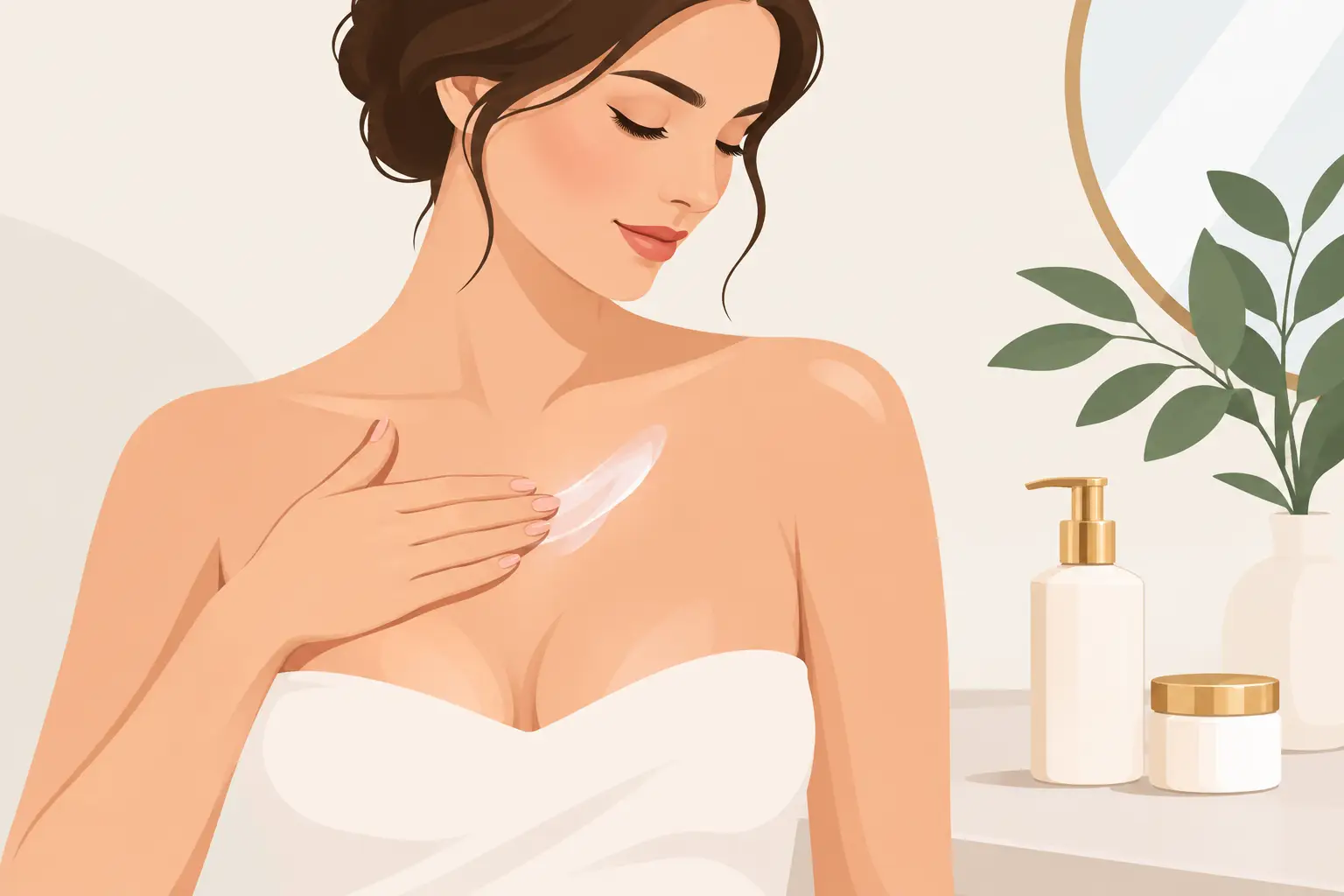
The face is often where skincare begins and ends. Yet the skin just below it meets the same daylight, dry indoor air, changing weather, and everyday movement, often with far less care. So, should décolletage be moisturized? For most people, yes. A simple, consistent application can help this often-forgotten area feel more comfortable, supported, and considered.
The answer is not about adding another complicated step or pursuing a flawless surface. It is about extending the care you already give your face to the skin that carries it forward.
Should Décolletage Be Moisturized Every Day?
For many people, daily moisturizing is a sensible practice for the décolletage, especially when the skin feels dry, tight, rough, or easily irritated. The décolletage includes the upper chest, generally from the base of the neck to the top of the breasts. It is a highly visible area, frequently exposed by open necklines, and routinely missed when skincare is applied.
Moisturizer does a modest but meaningful job. It helps hold water in the outer layer of skin and supports the skin barrier, the protective layer that helps keep irritants out and moisture in. When that barrier is compromised by dry weather, hot showers, cleansing, sun exposure, or simply time, the skin may feel less supple and more reactive.
There is no universal rule that every person must moisturize their chest twice daily. Skin that is naturally balanced may be comfortable with a lighter application or a nightly ritual. Drier, more mature, or sensitized skin may appreciate more regular care. The useful measure is not a rigid schedule. It is whether your skin feels calm, comfortable, and cared for over time.
Why the Décolletage Deserves Its Own Attention
The chest is not simply an extension of the face, nor is it quite like the skin on the arms or legs. It has its own conditions to contend with.
It is often exposed to ultraviolet light without the daily sun protection people reserve for their face. It also experiences movement throughout the day: turning your head, sleeping on your side, reaching, bending, and the gentle friction of clothing. At the same time, many people cleanse this area quickly in the shower, then move on without replacing moisture.
The result can be skin that looks or feels drier than expected. Fine surface lines may become more noticeable when skin is dehydrated. Texture can feel less smooth. Fragrance, sweat, sunscreen, jewelry, and fabric can occasionally contribute to irritation as well.
Moisturizing cannot erase the effects of years of exposure, and it should not be asked to. Its role is quieter. It helps make the skin’s everyday environment more supportive, particularly when used with sun protection and gentle habits.
Moisturizer and sunscreen do different work
A nourishing cream is not a substitute for sunscreen. Moisturizer supports hydration and comfort, while broad-spectrum sunscreen helps protect exposed skin from ultraviolet exposure. If your chest will be exposed during the day, sunscreen is the essential finishing step.
Think of the two as companions rather than alternatives. In the morning, a moisturizer may be helpful if your skin feels dry beneath sunscreen. At night, when the day’s exposure is behind you, a dedicated cream can become a slower moment of replenishment.
What to Look for in a Décolletage Moisturizer
The best product is not necessarily the one with the longest ingredient list or the loudest promise. For a daily décolletage ritual, look for a formula that feels comfortable enough to use consistently.
Humectants such as glycerin help draw water toward the skin. Emollients help soften and smooth the feel of dry texture. Occlusive ingredients help reduce moisture loss by creating a protective seal at the surface. A well-made cream may bring these functions together without feeling excessively heavy or leaving the skin coated.
Because the décolletage can be prone to sensitivity, restraint is often an advantage. Very strong exfoliating acids, high-intensity retinoids, or heavily fragranced products may be appropriate for some people, but they are not automatically better. If you use active treatments, introduce them gradually and pay attention to how your chest responds. Skin that stings, flakes, becomes persistently red, or feels itchy is asking for a simpler approach.
A cream designed for the ears, neck, and chest can make sense because it gives this region a clear place in your routine. RĒMĒMBĒR was created around that idea: thoughtful nightly care for the skin below and around the jawline that is so often left behind.
A Nightly Ritual That Is Easy to Keep
Consistency has more value than a crowded shelf. The easiest time to moisturize the décolletage is often after cleansing at night, when the skin is clean and you have a small pause before sleep.
Warm a modest amount of cream between your hands. Begin at the center of the chest and move upward over the décolletage, neck, and behind the ears with slow, unhurried strokes. There is no need to tug or massage aggressively. The point is application, not performance.
Let your hands follow the contours of the body rather than treating the chest as an afterthought. Breathe. Notice whether the skin feels dry, sensitive, or simply in need of attention. This is a brief ritual, but it can create a more complete boundary around the day.
If you prefer morning application, that is fine too. Apply moisturizer as needed, allow it to settle, and follow with sunscreen when the area will be exposed. For many, a nightly practice is easier to remember because it pairs naturally with facial skincare.
When Less Is More
There are moments when moisturizing needs a little more care. If you are managing acne or folliculitis on the chest, choose a formula that feels light and avoid piling on multiple rich products. If you have eczema, contact dermatitis, or a known fragrance sensitivity, a dermatologist can help you identify ingredients that are less likely to aggravate your skin.
Be especially careful after shaving, waxing, chemical exfoliation, or a sunburn. Skin that is freshly irritated may prefer a gentle, uncomplicated moisturizer and time to recover. Avoid scrubs and potent treatments until it feels calm again.
New or changing spots, persistent itching, unexplained rash, sores that do not heal, or a patch of skin that continues to change deserve professional attention. Moisturizer is daily care, not a diagnosis.
Care That Reaches Beyond the Mirror
The décolletage is easy to overlook because it sits just outside the frame of most mirrors. But it belongs to you with the same quiet familiarity as your face. It meets the light, holds the warmth of the day, and carries the visible signs of the life you are living.
A nightly application will not ask much of you. A few moments, a thoughtful cream, hands moving from chest to neck to ears. Over time, that small gesture can become less about correcting what you see and more about remembering the skin you usually forget.