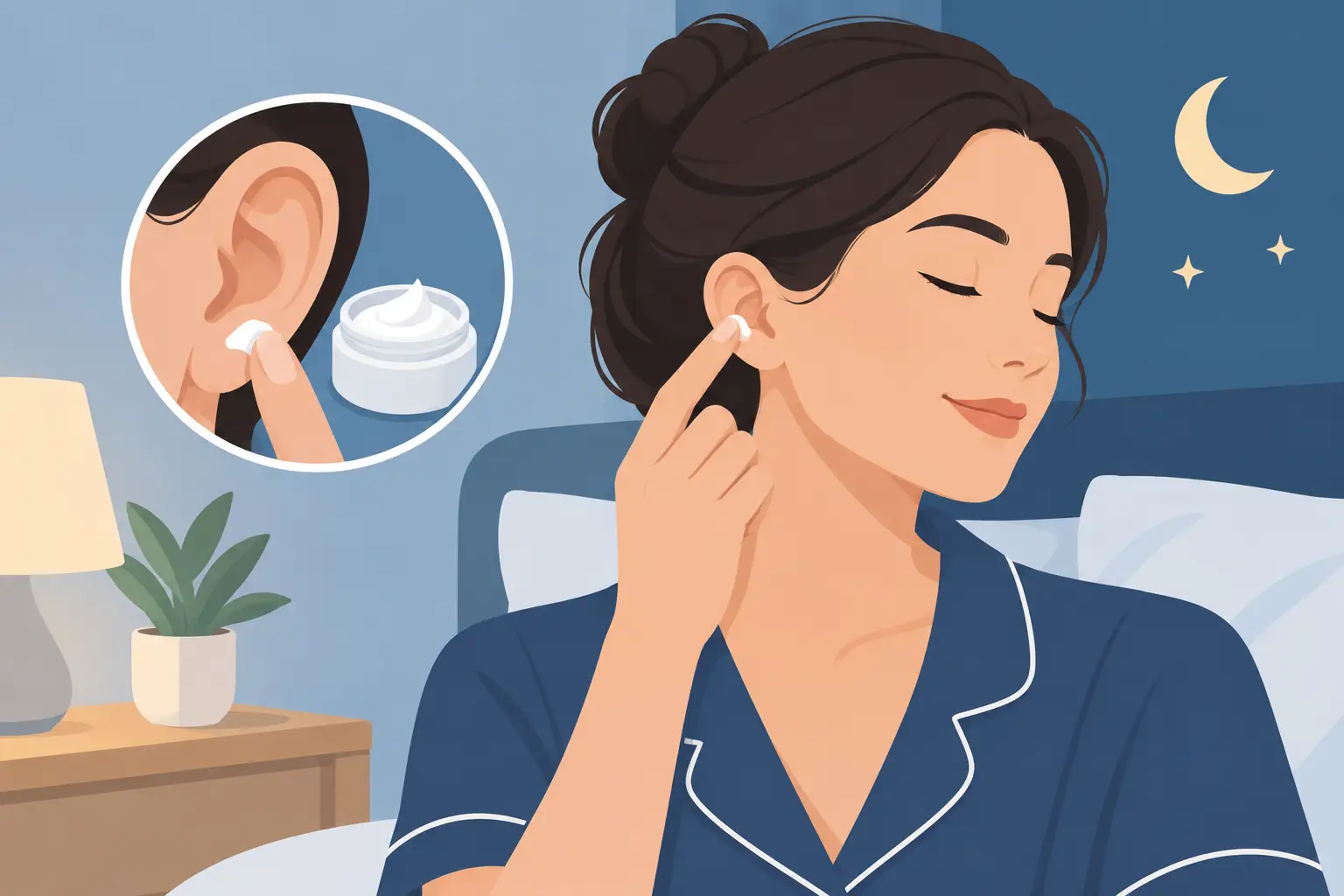
Your ears are exposed to the same sun, wind, dry air, cleansing, and changing seasons as your face. Yet when you smooth on a favorite moisturizer at night, they are often left outside the ritual. So, should you moisturize your ears? For the outer ear, the answer is usually yes: a small amount of gentle moisturizer can help support skin that is thin, mobile, and frequently overlooked.
The distinction matters. This is care for the visible outer ear - the earlobe, rim, folds, and skin behind the ear - not the ear canal. The goal is not another elaborate step. It is simply to remember a part of the body that has been quietly doing a great deal of living in the elements.
Why the skin on your ears deserves care
The ears are rarely shielded as consistently as the face. Hair may cover them sometimes, but it can also rub against them. Sunglasses, headphones, hats, phone calls, earrings, masks, and sleep all create friction or pressure. Add sun exposure and weather, and it is easy to see why the skin around the ears can feel dry, look dull, or become more reactive than expected.
The outer ear also has an intricate shape. Its curves can collect sunscreen, makeup, shampoo, and styling products during the day, then miss a thorough cleanse at night. Residue can be irritating for some people, while over-cleansing can leave the area feeling tight. As with most skin, comfort often comes from a quiet middle ground: cleanse gently when needed, then replenish with a formula that does not ask too much of the skin.
Earlobes and the area behind the ears deserve particular notice. These places are commonly exposed yet barely addressed. If you wear earrings, use hair color, or regularly wear glasses, they may experience repeated contact. A little thoughtful moisture can make a meaningful difference in how the skin feels.
Should you moisturize your ears if they are not dry?
Yes, you can. Moisturizing is not reserved for visible flaking or discomfort. A consistent layer of appropriate hydration and emollience helps the skin feel supple and can support its natural barrier before dryness becomes the thing that finally gets your attention.
That said, more is not necessarily better. Ear skin does not need to be coated in a heavy layer, and it does not need a carousel of potent actives. If your ears feel comfortable and your existing facial moisturizer is gentle enough for the area, extending a small amount to the outer ear may be all that is needed.
There are moments when more intention is especially welcome. Cold or low-humidity weather, long days outdoors, frequent travel, retinoid use near the jawline, and mature skin can all leave the area wanting a little more comfort. The skin does not need to look distressed to deserve care.
Keep moisturizer out of the ear canal
The outer ear is skin. The ear canal is a different environment, with its own protective systems. Do not place moisturizer, facial oil, cotton swabs, or other products inside it. Products in the canal can trap moisture, interfere with earwax, and contribute to irritation.
Apply only to the outside of the ear and the skin around it. If you are prone to ear infections, have ear tubes, have recently had ear surgery, or have been advised to keep your ears dry, ask your clinician what is appropriate for you before changing your routine.
It is also wise to pause if you have a rash, cracking skin, swelling, persistent itch, drainage, pain, or sudden changes in hearing. Dryness is common, but not every irritated ear is simply dry. Contact dermatitis from jewelry, hair products, fragrance, or topical products can look similar at first. A dermatologist or other qualified clinician can help identify what is actually happening.
How to add ear care to a nightly ritual
The easiest moment is after you have cleansed your face and before you consider the evening complete. Slow down for a breath. Warm a small amount of cream between clean fingertips, then move from the jawline over the ears and down the neck.
Use a light touch along the earlobes, the outer rim, the front and back of the ear, and the crease where the ear meets the head. There is no need to massage aggressively. This skin moves all day. Gentle contact is enough.
If you use a treatment product on your face, consider whether it belongs on the ears before automatically extending it there. Strong exfoliating acids, retinoids, benzoyl peroxide, and fragranced products can be irritating, especially in the folds around the ear. Many people do well with them, but sensitivity is personal. Introduce one new product at a time and reduce frequency if the skin becomes stingy, red, or flaky.
A simple, fragrance-conscious cream with a comfortable finish is often the most practical choice. Look for a formula made to moisturize rather than provoke. The skin around the ears does not need to be impressed. It needs to be supported, night after night.
Do not forget daytime protection
Moisturizer and sun protection serve different purposes. A nightly cream can help the outer ear feel nourished, but it does not replace broad-spectrum sunscreen during the day. The ears are a commonly missed area for sun exposure, particularly the tops, rims, and backs of the ears.
When applying sunscreen to the face, take what remains on your fingers over the outer ears, behind them, and down the neck. If you have short hair, wear your hair up, spend time driving, garden, walk, or exercise outdoors, this small extension of your routine becomes even more worthwhile. Hats provide useful coverage too, though they are not a complete substitute when the ears remain exposed.
This is less about perfection than repetition. The occasional elaborate routine cannot do what a small daily gesture does with ease.
Choosing the right texture for your ear skin
Your preference can guide you here. If the outer ears feel dry or rough, a richer cream may feel reassuring at night. If you are prone to clogged pores around the hairline or dislike residue on pillows and hair, choose a lighter cream and apply less. The right amount is the amount your skin can comfortably receive.
Pay attention to your jewelry as well. Nickel and other metals can cause irritation around pierced lobes, and a moisturizer will not solve an ongoing contact reaction. Removing jewelry before applying cream can keep product from collecting around the piercing. If a piercing is new or not fully healed, follow the aftercare guidance from your piercing professional rather than adding skincare products to the area.
For those who appreciate one product with a focused purpose, a nightly ritual cream designed for the ears, neck, and décolleté can make the habit feel more natural. RĒMĒMBĒR was created around this very idea: not to create a longer routine, but to give considered care to the skin below and around the jawline that traditional facial routines tend to leave behind.
A small act of remembrance
There is something clarifying about including the ears in your routine. It asks for very little - a few seconds, a gentle formula, and the willingness to notice what has been there all along. The benefit is not only softer-feeling skin. It is the steadiness of caring for yourself without waiting for a problem to demand it.
Tonight, when your hands reach the edge of your jaw, let them continue. Trace the curve of each outer ear, move down the neck, and let that be enough. The most lasting rituals are often the ones that quietly make room for what was forgotten.