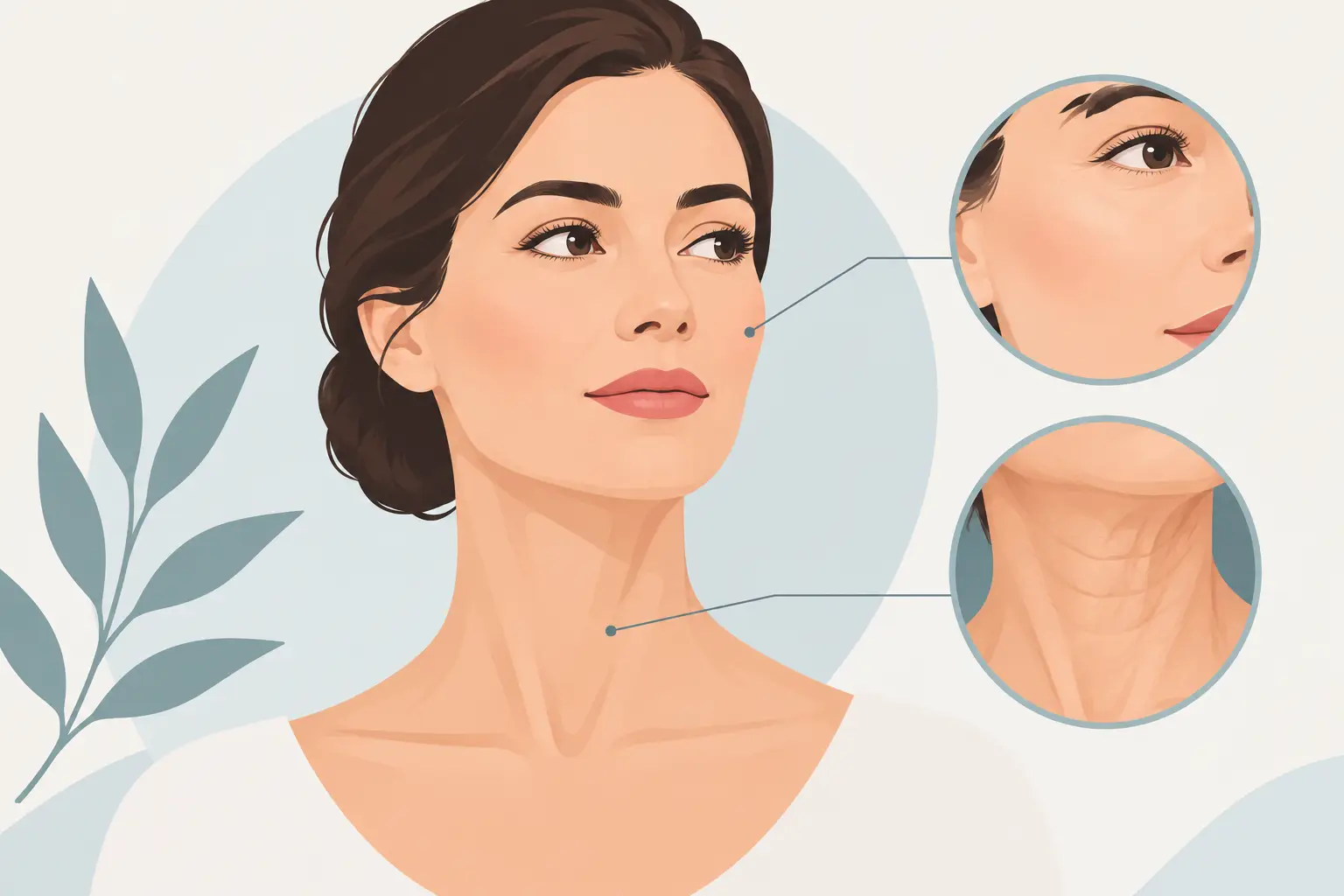
The first fine lines that catch you by surprise are not always on your face. They may appear just beneath the jaw, across the chest, or at the sides of the neck when you turn toward a window. Why does neck skin age faster? The answer is less about a single cause than a quiet accumulation: thinner skin, constant movement, frequent sun exposure, and years of being left out of the routine.
The neck does not need panic or a crowded shelf of products. It needs the same steady consideration you already offer your face. A few intentional minutes, repeated over time, can make this often-forgotten area feel cared for rather than overlooked.
Why Does Neck Skin Age Faster?
The skin on the neck is structurally different from much of the face. It is generally thinner, with less of the supportive cushioning found in areas like the cheeks. As collagen, elastin, and natural moisture reserves gradually change with age, that delicacy becomes more visible.
The neck is also a working part of the body. It bends when you read, turns when you drive, stretches when you look up, and folds when you sleep. Movement is natural and necessary, but repeated creasing can make lines more apparent over the years, especially when the skin is dry or has been exposed to a great deal of ultraviolet light.
Thin skin has less room for error
Facial skin varies considerably from one area to another, but the neck tends to have fewer oil glands than the face. Oil, in the right amount, helps support the skin barrier and reduces the feeling of dryness. With less natural oil production, neck skin can become parched more easily, making fine texture and creasing look more pronounced.
This is one reason a face moisturizer does not always feel sufficient when quickly swept down from the chin. The neck is not simply an extension of the face. Its needs are related, but its structure and daily demands deserve their own attention.
Movement leaves its quiet record
Horizontal neck lines are often discussed as though they are a modern problem caused entirely by looking down at a phone. Screens can certainly add more time in a folded posture, but they are not the whole story. Necks have always moved. Genetics, posture, skin thickness, hydration, sleep position, and sun history all play a part in how those movements become visible.
Trying never to crease the neck is neither realistic nor desirable. The more useful approach is to support supple, well-moisturized skin and to notice the habits that leave it exposed or dry. Care works best when it fits into real life.
Sun Exposure Reaches Beyond the Face
Many people apply sunscreen carefully to the forehead, cheeks, and nose, then stop at the jawline. Yet the front, sides, and back of the neck are routinely exposed while walking, gardening, driving, or sitting near a bright window. The upper chest often receives the same exposure, particularly in warmer months or with open necklines.
Ultraviolet exposure can contribute to uneven tone, a crepey appearance, and the gradual breakdown of collagen. It does not announce itself all at once. Often, it appears years later as a difference between the protected skin beneath the chin and the skin that has faced the day.
Daily sun protection on the neck, ears, and décolleté is one of the most practical ways to care for these areas. The right approach depends on your lifestyle, climate, sensitivity, and time outdoors. A broad-spectrum sunscreen applied generously is particularly useful when these areas will be exposed. Shade, hats, collars, and thoughtful clothing can offer meaningful support, too.
The Neck Is Often Cleaned, but Rarely Cared For
There is another simple reason neck skin can seem to age faster: it is frequently omitted from the steps that support it. Cleansers may be rinsed over the neck without much thought. Makeup, fragrance, hair products, and environmental residue can settle there. Then, when it is time to moisturize, the attention returns to the face.
This pattern is understandable. Skincare has long taught us to look closely at the mirror-facing parts of ourselves. But the neck, ears, and chest live in the same weather, light, and changing seasons as the face. They deserve to be included without becoming another complicated project.
A useful ritual does not require a dozen steps. It asks only that you remember where your care should continue.
A Nightly Ritual for the Neck and Décolleté
Evening is an especially natural time to tend to the skin below the jawline. The day has left behind sunscreen, city air, dry indoor heat, and the small stresses of movement. After cleansing, apply a nourishing cream to the neck, ears, and upper chest while the skin is still slightly receptive to moisture.
Use gentle, unhurried strokes. Start at the décolleté and move upward along the neck, then soften the remaining product around and behind the ears. There is no need to tug or overwork the skin. The value is in consistency, not force.
Choose formulas with purpose rather than noise. A well-made nightly cream should feel comforting enough to use every evening and thoughtful enough to earn its place in a small routine. If you are introducing active ingredients, such as retinoids or exfoliating acids, proceed carefully. The neck can be more sensitive than the face, and what your cheeks tolerate easily may feel irritating below the jaw.
For some people, a gentler formula used consistently is more beneficial than an aggressive treatment used irregularly. If skin feels stinging, tight, flaky, or persistently red, simplify the routine and give the barrier time to settle. More is not always more.
Small Habits That Add Up
The most effective care is often the care you will actually repeat. Bring your face routine down to the chest each morning and evening. Apply sun protection to the ears, neck, and décolleté whenever they are exposed. Keep very hot water brief if it leaves your skin feeling stripped, and be mindful of fragrances or hair products that seem to cause irritation along the neck.
Posture can be worth considering, not as a demand for perfection but as a kindness to the body. Raise a book or screen when it is comfortable to do so. Take breaks from a fixed position. Let the neck move through its full, ordinary range instead of holding it in one angle for hours.
These actions will not erase the evidence of a life lived outdoors, in motion, and in conversation. Nor should they. They can help the skin feel more comfortable, supported, and included in the care you already give yourself.
When a Closer Look Is Wise
Dryness, fine lines, and gradual textural change are common. But a new, changing, bleeding, scaly, or persistent spot on the neck, chest, or ears deserves professional attention. These areas receive significant sun exposure and can be easy to miss when checking your own skin.
A dermatologist can also help with concerns such as ongoing irritation, a rash that does not resolve, sudden pigment changes, or questions about which ingredients suit your skin. Thoughtful home care and professional guidance can coexist well. One supports the daily rhythm; the other offers clarity when something needs closer attention.
Tonight, when you finish caring for your face, pause at the jawline. Breathe, slow down, and continue. The neck has carried you through every turn toward the people and places you love. Let it be remembered.