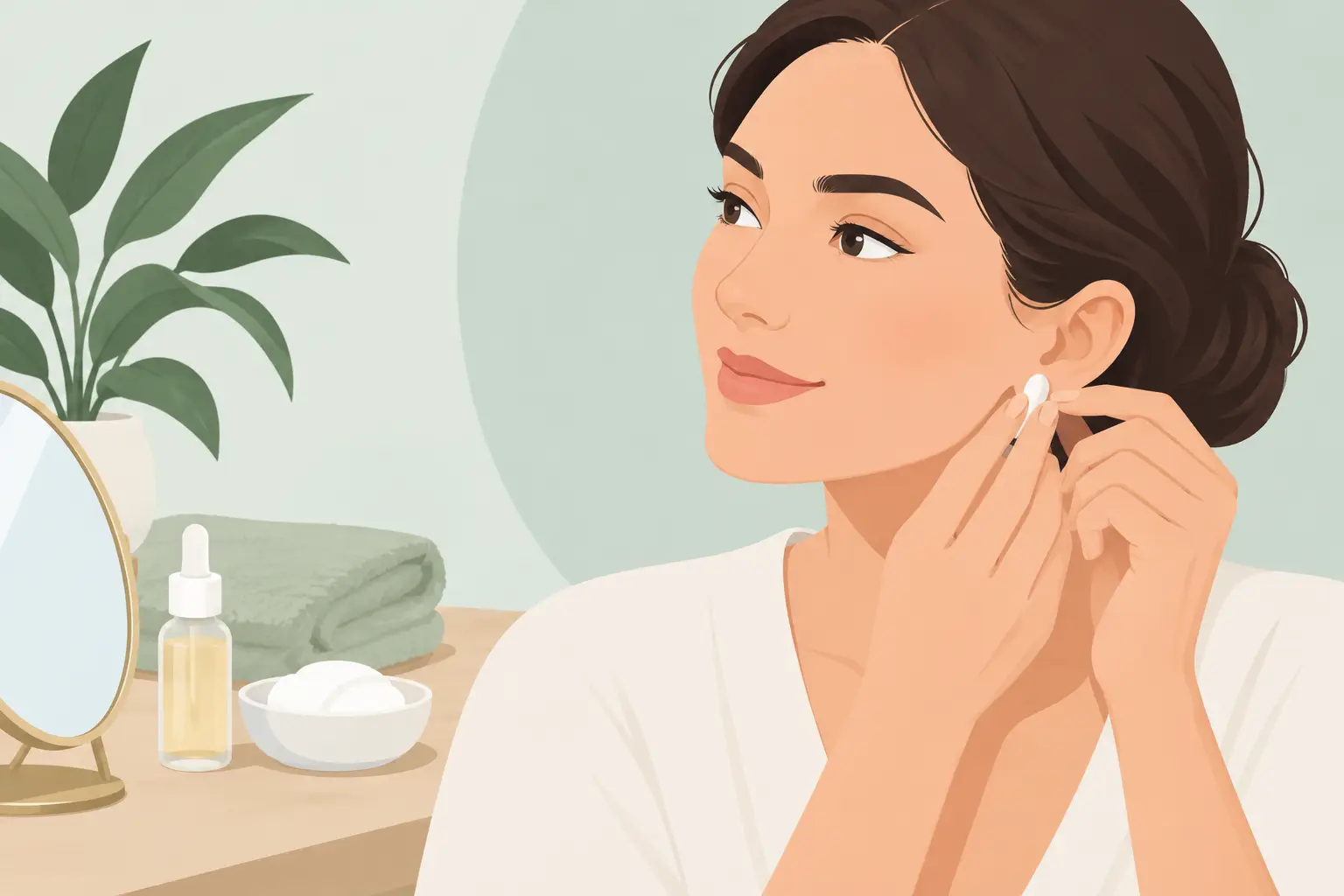
Your earlobes may be small, but they ask a great deal of their skin. They hold the weight of jewelry, meet the sun without much protection, brush against hair products and fragrance, and are often skipped entirely at the sink. Learning how to care for earlobes is less about adding another complicated step and more about extending the care you already give your face to a place that has quietly been left out.
The skin of the ears, including the lobes, is exposed and easily overlooked. For many of us, attention only arrives when an earring feels uncomfortable, a piercing becomes irritated, or the skin begins to feel dry. A small, consistent ritual can be gentler and more useful than waiting for a problem to ask for it.
Why Earlobes Need Their Own Care
Earlobes do not have the same demands as the skin around your eyes or across your cheeks, but they are not invisible extensions of the face, either. They are soft, mobile skin that stretches with expression, sleep, phone calls, headphones, and jewelry. Over time, sun exposure and ordinary movement can leave them feeling dry, less supple, or more sensitive than you expect.
The area also encounters a surprising amount of residue. Shampoo and conditioner rinse over the ears. Styling products cling near the hairline. Perfume is often sprayed nearby. Makeup, sunscreen, and cleansing products may reach the front of the ear but miss the back and the delicate fold where the ear meets the head.
None of this calls for alarm. It calls for remembrance. When you care for your face, pause for the few extra seconds it takes to include your ears, the skin behind them, and the beginning of the neck. This is where a routine becomes a practice rather than a checklist.
How to Care for Earlobes, Morning and Night
A good earlobe routine should feel uncomplicated enough to repeat. In the morning, cleanse away any overnight skincare, hair product, or perspiration that has collected around the ears. You do not need a separate cleanser. The gentle cleanser you use for your face is usually enough, provided it does not leave your skin tight or stinging.
Use lukewarm water, not hot. Hot water can make already-dry skin feel more depleted, especially during colder months or after a long shower. As you rinse, gently pass your fingertips over the front and back of each earlobe. If you wear earrings, be mindful of the skin around the piercing rather than scrubbing it.
After cleansing, pat the ears dry. The crease behind the ear deserves particular care because trapped moisture can contribute to irritation. Then apply moisturizer while the skin still feels lightly damp. A small amount is sufficient, but it should reach both sides of the lobes, the outer ear, and the skin just behind it.
At night, repeat the same simple gesture after removing makeup and before settling into bed. This is an especially natural moment to use a nourishing cream formulated for the ears, neck, and décolleté. RĒMĒMBĒR was created around this idea: care for the exposed skin below and around the jawline with the same considered attention often reserved for the face.
Warm a small amount between your fingers. Press it gently over each lobe, then sweep it along the outer ear and down toward the neck. There is no need for a complicated massage. Let the application be slow enough that you notice the area, its texture, and any changes worth keeping an eye on.
Do Not Forget Sunscreen
The tops and fronts of the ears are well-known places to miss with sunscreen, but earlobes deserve coverage too. They may receive direct light when your hair is up, short, fine, or parted, and they are exposed while driving, walking, gardening, or sitting beside a bright window.
Apply a broad-spectrum sunscreen to the full outer ear as part of your morning routine. Use your fingertips to cover the lobes, the rim of the ear, the small folds, and the skin behind the ears. If you spend extended time outdoors, reapply according to the product directions, especially after sweating or swimming.
Sunscreen is not an anti-aging performance. It is an ordinary protective habit for skin that meets the day before you do. A hat with a brim adds another thoughtful layer of coverage, though it does not replace sunscreen on exposed skin.
Jewelry Can Change What Your Earlobes Need
Earrings bring beauty and personal history, but they can also create friction. Heavy styles may pull on the lobes over hours of wear. Posts and backs can collect soap, hair product, and skin oils. Certain metals can cause itching, redness, flaking, or tenderness in people with sensitivities.
If your lobes feel sore at the end of the day, give them a rest. Choose lighter earrings for regular wear and reserve heavier pairs for shorter occasions. Consider the fit of the backing as well. A backing pressed too tightly against the skin traps moisture and leaves little room for airflow.
For sensitivity, the material matters. Nickel is a common culprit, while higher-quality options such as titanium, niobium, platinum, and certain forms of gold may be better tolerated. Still, skin is individual. Even a material that works beautifully for someone else may not agree with you.
Clean earrings regularly, following the maker's care instructions, and make sure they are fully dry before putting them on. If you have a new piercing, follow the aftercare guidance from your professional piercer rather than introducing rich creams, fragrance, or unnecessary products near the opening.
Know the Difference Between Dryness and Irritation
Dry, tight, or lightly flaky earlobes often respond well to gentler cleansing and consistent moisture. Try simplifying the products that touch the area for a week or two. Skip fragranced sprays near the ears, rinse shampoo and conditioner thoroughly, and avoid rubbing the lobes dry with a towel.
Irritation may look different. Persistent itching, cracking, warmth, swelling, oozing, crusting, or pain can point to contact dermatitis, an infection, or another skin concern that deserves professional guidance. Remove the suspected irritant if you can do so safely, but do not try to solve a worsening reaction with layers of new products.
The same goes for a changing spot on the ear or earlobe. Because ears see so much sun, new, changing, bleeding, or nonhealing marks should be checked by a dermatologist. This is not about scrutinizing yourself. It is about giving an often-neglected area the same sensible attention you would give the rest of your skin.
A Few Small Adjustments That Add Up
Care for your earlobes is shaped by the rest of your routine. If you use retinoids, exfoliating acids, or other potent facial treatments near the jawline, be cautious as you move toward the ears. The skin may tolerate less than your cheeks do. Start slowly, avoid applying active treatments directly onto irritated or freshly pierced skin, and add moisture generously.
Your sleeping habits can matter, too. Side sleepers may notice more friction on the ear that rests against the pillow. A clean, smooth pillowcase and a calm nightly application of moisturizer can make the ritual feel more comfortable. If you wear over-ear headphones, glasses, hearing aids, or a face mask for long stretches, take a moment to check for pressure points and cleanse away buildup at day's end.
There is no perfect earlobe routine, only one you can return to. Some days it may be sunscreen and a quick touch of cream. Other nights, it may be a longer pause at the mirror, breathing slowly while you care for the skin you usually forget. That quiet attention has a way of changing more than the surface.