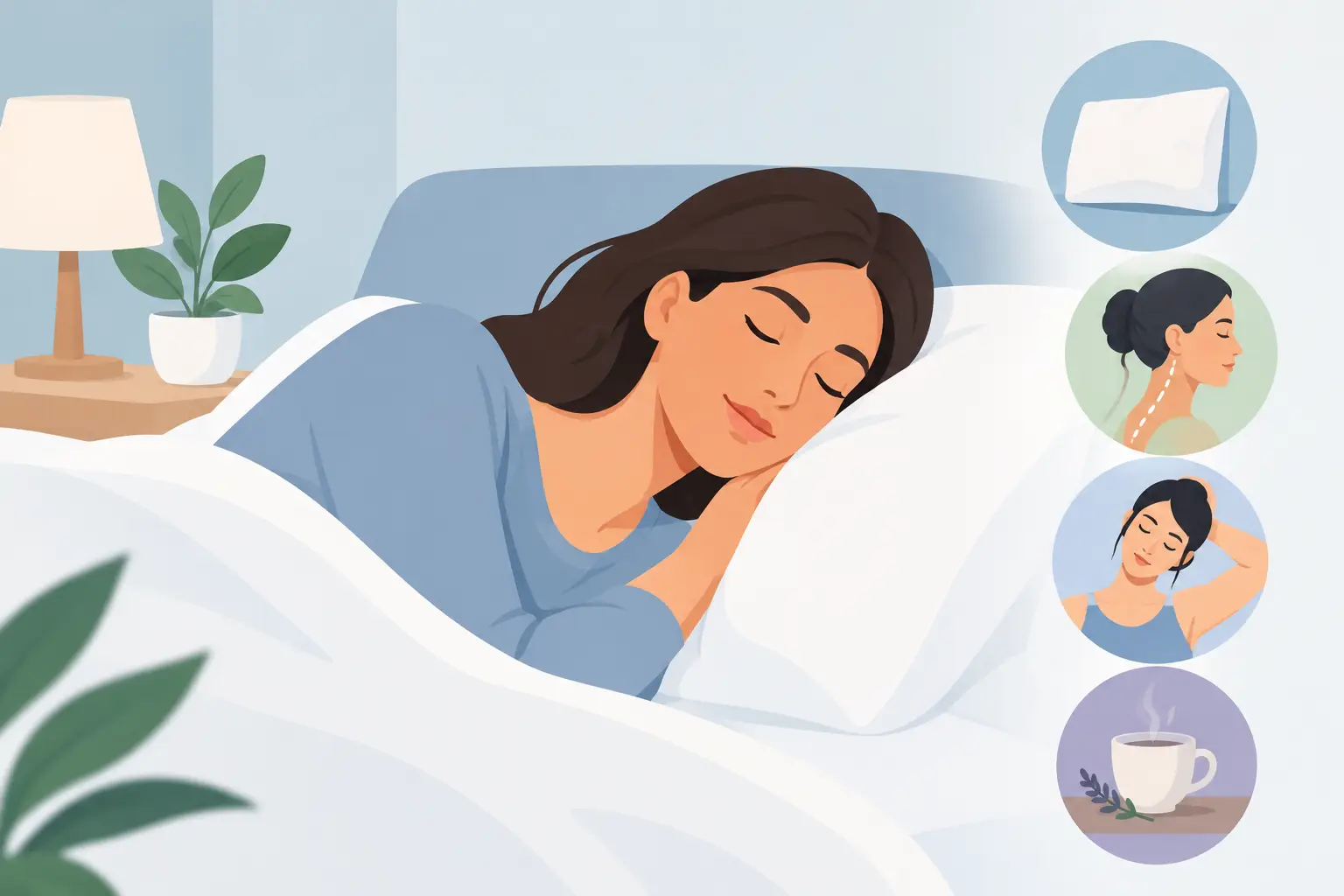
A neckline that seems to appear overnight can feel strangely personal. You wake rested, look in the mirror, and find a horizontal crease at the base of the neck or across the chest. Learning how to reduce sleep necklines begins with a gentler perspective: these marks are often the visible record of pressure, movement, and skin folding during the hours you spend asleep.
They are not a sign that you have done something wrong. But they can be a reminder to extend the same thoughtful care you give your face to the skin below it - skin that is thinner, frequently exposed, and in near-constant motion.
Why sleep necklines form
Sleep necklines are usually compression lines. When the neck bends forward, turns to one side, or rests against a pillow in the same position for hours, the skin folds. In younger, well-hydrated skin, those folds often smooth out quickly after waking. Over time, however, repeated compression can make lines more noticeable or slower to fade.
The neck and décolleté are especially susceptible because their skin is comparatively delicate and has fewer oil glands than the face. It also moves constantly as you look down, turn your head, swallow, and sleep. Add years of sun exposure, natural changes in collagen and elasticity, dry indoor air, or an inconsistent moisturizing routine, and a temporary morning crease may linger longer than it once did.
This is why a single miracle product is not the answer. Reducing the appearance of sleep necklines is usually about lowering repeated stress on the skin while supporting it with simple, steady care.
How to reduce sleep necklines through your sleep position
The most direct way to limit overnight compression is to consider how your neck rests. Back sleeping tends to create the fewest chest and side-neck folds because the skin is not pressed into the pillow. For many people, though, changing sleep positions is easier said than done. Sleep is not a posture contest, and comfort matters.
If you are naturally a side sleeper, try adjusting rather than forcing a total change. A pillow with enough support to keep your head from tipping sharply downward may reduce deep folding at the neck. Your goal is a neutral, comfortable alignment, not a rigid position. Some people find that a pillow placed behind the back makes it easier to stay partly on their back, while a pillow held in front of the body makes side sleeping feel less compressed through the shoulders and chest.
Stomach sleeping can place the neck in a long period of rotation and press the face, neck, and décolleté into bedding. If this is your preferred position, small shifts are still worthwhile. A lower-profile pillow or a gradual move toward side sleeping may be more sustainable than trying to change everything at once.
Your pillowcase can also affect the experience of sleep, although it cannot erase established lines. A smooth, clean fabric creates less friction than a rough or heavily textured surface and may feel kinder to delicate skin. Choose what feels pleasant and practical enough to wash regularly. Consistency has more value than an elaborate sleep setup you abandon after a week.
Give the neck a nightly ritual, not an afterthought
The hours before bed are a useful time to care for the skin that will spend the night moving against sheets and pillows. After cleansing your face, bring any gentle, compatible hydration down the neck and across the upper chest. Then apply a nourishing moisturizer while the skin is still slightly damp, using slow upward strokes from the décolleté toward the jawline.
This is less about a complicated technique than about making contact with an area that is so often skipped. A well-formulated neck cream can help support the skin barrier and soften the look of dryness that makes fine lines more apparent. Look for purposeful moisturizing ingredients and a texture you will want to use every evening. If a formula stings, leaves the skin uncomfortable, or asks too much of a reactive neck, it is not the right ritual for you.
RĒMĒMBĒR was created for this very moment: a quiet nightly renewal practice for the ears, neck, and décolleté, where facial-level attention is often missing. The point is not to chase a perfectly smooth neck by morning. It is to offer these areas the regular nourishment they deserve.
Apply product with a light touch. Tugging, aggressive massage, or repeated pulling will not improve sleep lines. Let your hands slow down instead. Sweep over the sides and front of the neck, then continue across the chest, especially if you tend to sleep on your side. Breathe. Give the skin a moment of care before it meets the pillow.
Be selective with stronger actives
If you use retinoids, exfoliating acids, or other active treatments on your face, do not assume your neck will tolerate the same frequency. The neck can be more reactive, and irritation can leave skin feeling dry, tight, and more visibly lined. Introduce active products gradually, follow their directions, and balance them with a supportive moisturizer.
For persistent irritation, unusual changes in texture, or a line that changes in a concerning way, speak with a board-certified dermatologist. At-home care can support the look and comfort of the skin, but it should not replace professional guidance when something feels off.
Protect the neck during the day
Nighttime compression is only one part of the picture. The neck is exposed to daylight whenever the face is, yet sunscreen often stops at the jawline. Daily broad-spectrum sun protection on the neck, ears, and upper chest helps protect skin from the cumulative effects of UV exposure, which can contribute to visible texture changes and loss of firmness over time.
Bring sunscreen down to the chest when it is exposed, and remember the sides and back of the neck if your hair is up. A collar, scarf, or shade can add another layer of protection during long periods outdoors. This is not about avoiding the sun entirely. It is about recognizing that the skin below the face is part of the same daily landscape.
Hydration helps, too, though it is often misunderstood. Drinking enough water supports overall well-being, but it will not independently erase a crease. Topical moisture is what most directly changes the immediate look and feel of dry, dehydrated skin. Think of internal hydration and external care as companions, not substitutes.
Keep expectations patient and realistic
A sleep line that fades within an hour or two of waking is likely a temporary compression mark. A line that remains visible may be influenced by repeated folding, sun exposure, skin dryness, and natural changes in elasticity. No pillow, cream, or sleeping position can promise to remove every established line.
What can help is repetition. A more supportive pillow arrangement, a nightly moisturizing ritual, daily sun protection, and less friction can make the skin look more comfortable and cared for over time. Take notice over weeks, not mornings. Skin rarely responds on the schedule of a single night.
A small act of remembrance
The neck carries your face through the world, turns toward the people you love, and bends over the ordinary work of your days. Before sleep, let it receive a little of the care you already know how to give. Not as a correction, but as a quiet practice of remembering what has been there all along.