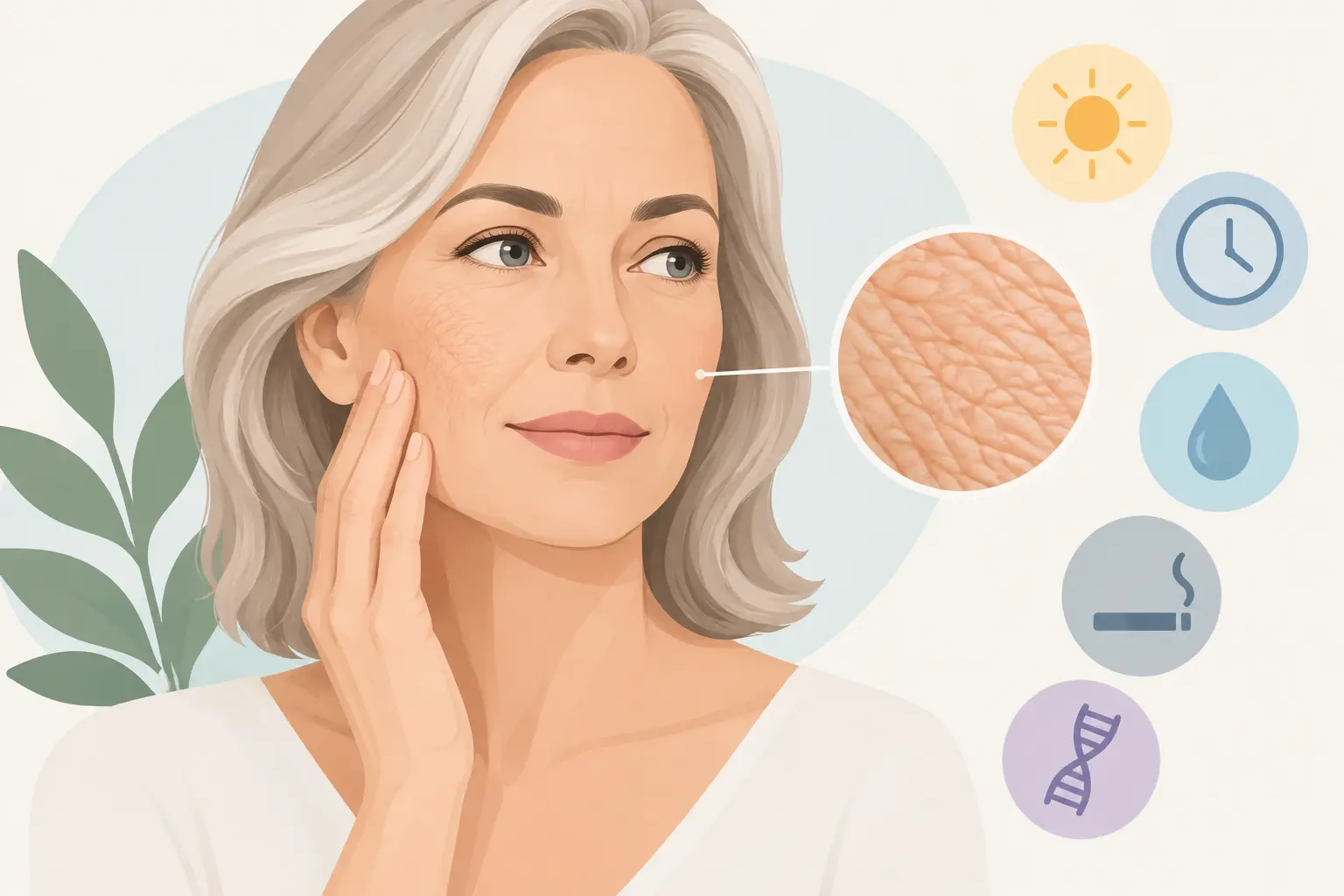
Crepey skin rarely arrives all at once. It is often first noticed in a particular light: fine, tissue-paper-like lines at the neck, a softer texture across the chest, or delicate folding around the ears. If you have wondered what causes crepey skin texture, the answer is not one single habit or one birthday. It is the accumulated effect of exposure, changing skin structure, movement, and the care these easily forgotten areas have or have not received.
The neck, décolleté, and ears are especially revealing because their skin is thin, mobile, and frequently exposed. They live in the space between the care we give our face and the protection we remember for the rest of our body. A thoughtful response begins there, not with a promise to erase time, but with the simple decision to include this skin in your daily care.
What Causes Crepey Skin Texture?
Crepey texture describes skin that looks finely wrinkled, loose, or papery. It can occur anywhere, but it is common on the neck, chest, upper arms, knees, and around the eyes. Unlike a single expression line, crepiness is usually a broader change in the skin's surface and support structure.
Underneath the surface, collagen and elastin help skin feel resilient and spring back after it moves. Natural moisturizing factors, lipids, and hyaluronic acid help it hold water and maintain a smoother-looking surface. Over time, these systems change. When they do, skin can become drier, less cushioned, and more likely to show fine folds.
Age is part of the picture, but it is not the whole picture. Some people notice crepiness earlier because of cumulative sun exposure, naturally dry skin, weight changes, hormonal shifts, smoking, certain medications, or a long-standing habit of caring diligently for the face while stopping at the jawline.
Sun exposure changes more than color
Ultraviolet exposure is one of the most significant external contributors to crepey-looking skin. It can gradually affect collagen and elastin, the fibers that give skin its structure and flexibility. The result may appear as fine lines, thinning, uneven tone, or a texture that seems less smooth than it once did.
The chest often receives more sunlight than we realize, especially through lower necklines, car windows, outdoor lunches, and ordinary errands. Ears are similarly easy to miss when applying sunscreen. The sides of the neck can receive years of incidental exposure, even for people who are careful about their face.
This is not a reason to avoid the outdoors. It is a reminder to extend daily sun protection beyond the face, using shade, clothing, hats, and broad-spectrum sunscreen where appropriate. Consistency matters far more than perfection.
Skin becomes thinner and slower to replenish
As the years pass, skin naturally produces less collagen and elastin. Cell turnover and oil production can slow as well. These shifts are normal, but they can be more visible in areas that begin with less cushioning, such as the neck and décolleté.
Hormonal changes can also influence texture. During and after menopause, lower estrogen levels may contribute to dryness and changes in skin firmness for some people. Genetics matter, too. One person may retain a denser-looking neck skin texture well into later life, while another develops fine crepiness sooner despite similar routines.
No cream can change every aspect of skin aging, and it is worth being honest about that. Yet daily moisture and gentle, well-chosen care can support the skin barrier and improve the look and feel of dryness-related texture. There is value in tending to what is within reach.
The Quiet Role of Dryness and a Weakened Barrier
Dry skin can make crepiness look more pronounced. When the outermost layer lacks water and lipids, light does not reflect as evenly across its surface. Fine lines can look deeper, and skin may feel rough, tight, or less supple.
This is especially relevant for the neck and chest. Hot showers, dry indoor air, strong cleansers, frequent fragrance exposure, and overuse of exfoliating acids or retinoids can all leave delicate skin feeling stripped. A product that works beautifully on a more resilient forehead or cheek may be too much, too often, for the neck.
The answer is not necessarily to avoid every active ingredient. It is to pay attention to response. If skin stings, flakes, or feels persistently tight, simplify. Use a gentle cleanser, apply moisturizer while skin is still slightly damp, and give the barrier time to settle. More products do not always create more care.
Movement Makes Delicate Skin Work Harder
The neck is always in motion. We turn our heads, look down, sleep in different positions, speak, swallow, and move through the day. That movement is part of being alive, but it means this skin repeatedly bends and stretches.
The chest has its own demands. It is affected by sleeping position, posture, clothing friction, and the natural movement of the body. Ears are exposed to weather, hair products, eyeglass arms, headphones, and the occasional forgotten swipe of sunscreen.
Movement does not cause crepiness on its own. But when skin is thin, dry, sun-exposed, or losing some of its underlying support, repeated folding becomes easier to see. This is why a calm, regular ritual can be more useful than chasing a dramatic fix. Caring for the area every evening gives it a moment of replenishment after a day of exposure and motion.
Lifestyle Factors That Can Add Up
Crepey texture is not a moral report card. Still, a few lifestyle factors can influence how skin looks and feels over time. Smoking is associated with changes in collagen and circulation. Significant or rapid weight loss can leave skin looking looser, particularly where underlying volume has changed. Chronic dehydration will not single-handedly create crepey skin, but adequate fluids support the body as a whole, while topical moisture directly supports the skin surface.
Stress and poor sleep may also show up in the skin, though not always in a straightforward way. When life is demanding, routines are often the first thing to fall away. Sunscreen is skipped. Moisturizer stays on the counter. The neck and chest become an afterthought again.
That is why the most useful ritual is one you can actually keep. It does not need to be elaborate. It needs to have a place in your evening.
Caring for Crepey-Prone Neck, Chest, and Ear Skin
Start by treating these areas as an extension of the face, rather than an afterthought below it. In the morning, bring sunscreen down the neck and across the chest, and apply it to the ears if they are exposed. Reapply during prolonged time outdoors, especially when wearing open necklines or your hair up.
At night, slow down for a minute. After cleansing, apply a nourishing cream to the neck, décolleté, and outer ears with light upward strokes and an easy touch. The goal is not to pull at delicate skin or force a result. It is to replenish moisture and create a repeatable moment of attention.
Look for formulas designed with purpose: supportive moisture, barrier-conscious ingredients, and a texture that encourages regular use. Be cautious with aggressive exfoliation or highly potent treatments on the neck and chest, particularly if you are prone to sensitivity. A dermatologist can help guide options for more significant concerns, sudden changes, itching, bleeding, or a spot that looks different from the rest.
At RĒMĒMBĒR, we believe the ritual itself matters. The skin below and around the jawline does not need a crowded cabinet or noisy promises. It needs to be included.
Crepey texture is often a visible record of living in the light, moving through the years, and caring for everyone and everything before yourself. Tonight, breathe, smooth a little care over the skin you usually forget, and let consistency be enough.