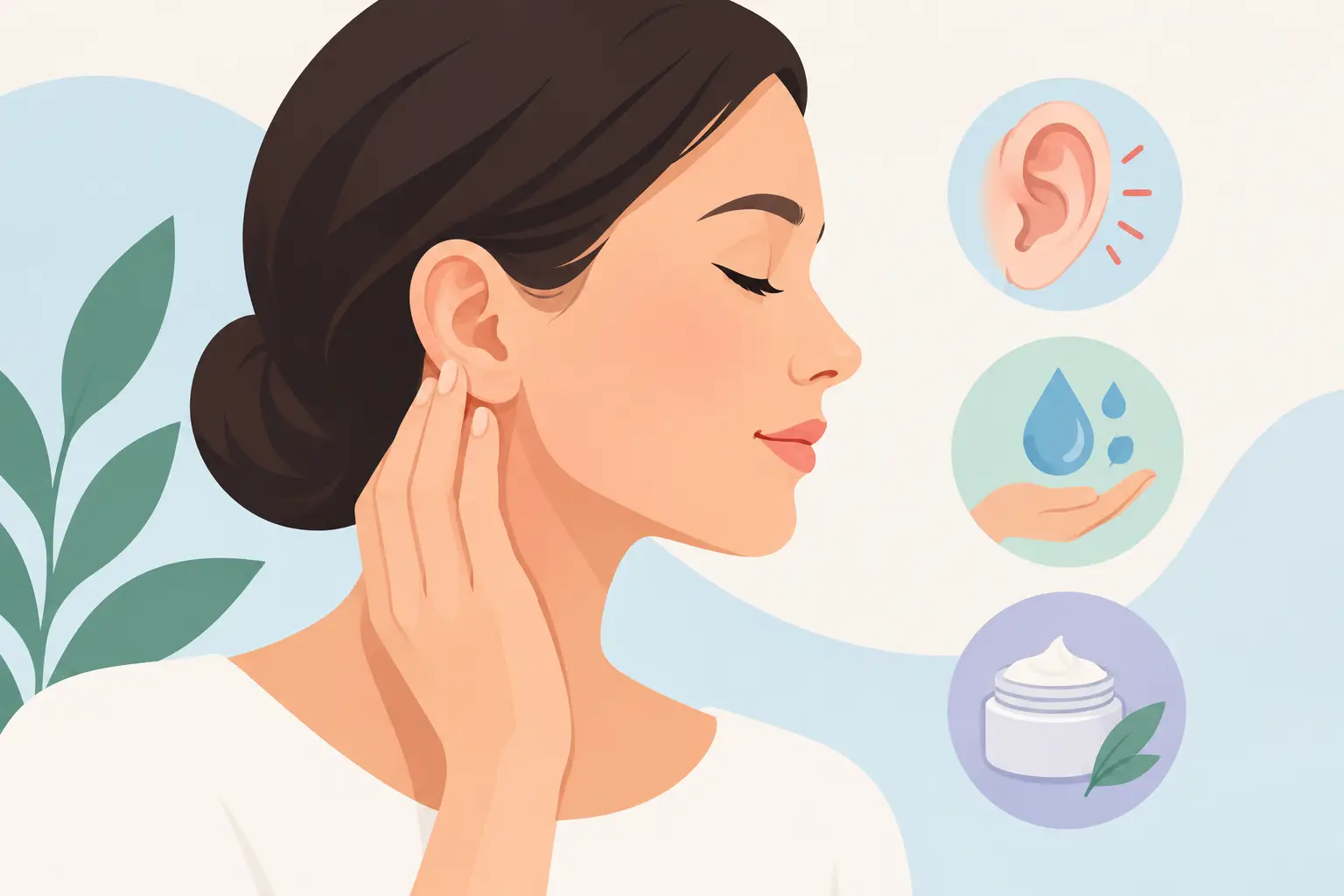
Your ears may be the first part of your skin to complain on a cold, windy walk - tight, flushed, itchy, or suddenly tender beneath a familiar earring. Yet they are often the last place moisturizer reaches. If you have wondered, why is ear skin sensitive, the answer is not one single culprit. It is a meeting point of delicate structure, constant exposure, friction, and a care routine that usually ends at the jawline.
The skin around and behind the ears does a great deal quietly. It faces the sun, wind, dry indoor air, hair products, glasses, headphones, masks, phones, and the ordinary movement of daily life. A little attention can make that small, exposed area feel more comfortable and more considered.
Why Is Ear Skin Sensitive?
Ear skin is not identical from one surface to the next. The outer ear has thin skin draped over cartilage, with relatively little cushioning beneath it. The earlobe is softer, but it is also easily pulled, compressed, and irritated by jewelry. Behind the ear, folds can hold moisture, sweat, styling products, and residue from shampoo or conditioner.
This varied landscape has fewer defenses than we tend to assume. Skin that is thin or frequently exposed can lose moisture more readily, especially as we age. When its barrier is depleted, everyday things can sting or feel abrasive: cold air, a fragranced spray, a wool collar, even the pressure of sleeping on one side.
Sensitivity also depends on the person and the season. Some people are naturally prone to dry or reactive skin. Others notice ear discomfort only in winter, during allergy season, after swimming, or when they introduce a new product. The useful question is less whether ears should be sensitive and more what may be asking them to work harder than usual.
The Everyday Pressures Ears Carry
Sun and weather reach farther than sunscreen
Ears sit in direct line with sunlight, particularly along the upper rim and outer edges. They are also exposed when the face is shaded by a hat, hair, or sunglasses. UV exposure can contribute to dryness and visible changes over time, while wind and low humidity can leave the surface feeling rough or tight.
This is one reason ear care belongs beside neck and décolleté care. These are not hidden areas. They are among the first to meet the elements, and they deserve the same measured daily protection you give your face.
Product residue can linger where you do not see it
Haircare is a common but overlooked source of irritation. Shampoo, conditioner, dry shampoo, hairspray, hair dye, fragrance, and styling creams can settle on the ears or collect in the fold behind them. Even a product that works beautifully in your hair may not be welcome on more delicate skin.
If your ears become itchy or red after a new hair product, take notice of the timing. Rinsing around the ears carefully after washing your hair and keeping leave-in products off the skin can be a simple first adjustment. The same goes for facial cleansers or exfoliants that travel farther than intended in the shower.
Friction has a cumulative effect
Glasses rest on the ears for hours. Headphones create warmth and pressure. Phone calls press a device against the same area repeatedly. Masks, helmet straps, hearing aids, and earrings all introduce contact and movement.
None of these things are inherently a problem. But when skin is already dry or reactive, repeated rubbing can turn a minor sensitivity into persistent discomfort. Consider where the irritation appears. Tenderness directly beneath glasses or headphones points to a different pattern than dry flaking across the outer ear.
Jewelry deserves a closer look
Earrings are personal, often sentimental, and sometimes the source of an avoidable reaction. Nickel is a frequent trigger for contact sensitivity, even in people who have worn earrings for years without issue. Metal backs, plated pieces, and jewelry that is not cleaned regularly can all irritate a piercing or the surrounding lobe.
If the lobe is red, itchy, swollen, or weepy, remove the suspected jewelry and give the area time to settle. Choose materials known to be gentler for sensitive ears, and avoid applying heavy creams directly inside a fresh or inflamed piercing. Persistent swelling, pain, or discharge deserves professional guidance rather than more experimentation at home.
The Role of Skin Changes Over Time
With time, skin produces less of the lipids that help hold moisture in place. It may also become thinner and slower to recover from environmental stress. On the ears, neck, and chest, this can show up as a feeling of dryness that returns quickly, fine texture, or greater sensitivity to products that once felt ordinary.
This is not a reason to pursue a complicated routine. It is an invitation to become more attentive. The skin below and around the jawline is mobile, exposed, and often missed. Consistent, gentle care is generally more useful than cycling through strong treatments in search of a dramatic reset.
A Gentler Ritual for Sensitive Ear Skin
Start by treating the outer ear as skin, not an afterthought. After cleansing, pat it dry rather than rubbing with a towel. Be especially gentle in the fold behind the ear and around the earlobe. Do not insert cotton swabs, creams, or skincare products into the ear canal. The canal has its own delicate balance and is not a place for a skincare ritual.
At night, when you moisturize your face, extend a small amount of a simple, fragrance-conscious moisturizer over the outer ear, behind the ears, and down the neck. Use light pressure. There is no need to scrub, pinch, or overwork the area. A quiet application is enough.
For daytime, sun protection matters on the visible outer ear when it will be exposed. If sunscreen tends to sting or trigger sensitivity, a wide-brimmed hat can offer welcome physical coverage. It does not have to be perfect to be meaningful. The goal is to reduce the daily strain, not create another anxious rule.
RĒMĒMBĒR was created around this overlooked terrain: the ears, neck, and décolleté that receive so much exposure and so little ritualized care. A focused nightly practice can be a way to slow down, breathe, and care for the skin you usually forget.
When Sensitivity Needs More Than Moisture
Dryness is common, but not every ear concern is simply dry skin. Itching with scaling may be related to eczema, seborrheic dermatitis, or psoriasis. A sudden rash can signal contact dermatitis from a product, metal, or medication. Pain, warmth, spreading redness, crusting, drainage, or a change that does not resolve should be assessed by a dermatologist or other qualified clinician.
The same is true for any new, changing, bleeding, or non-healing spot on the ear. Because ears receive regular sun exposure, they are worth checking with the same care you would give your face, scalp, neck, and chest. Early attention is an act of care, not alarm.
If you are trying to identify a trigger, simplify for a week or two. Pause new products, avoid fragranced sprays near the ears, keep jewelry minimal, and use one gentle moisturizer on the outer skin. Reintroduce items slowly. This makes patterns easier to see than changing everything at once.
Your ears do not need a crowded shelf or a loud promise. They need recognition. Let the last step of your evening routine travel a little farther - over the ears, along the neck, and toward the chest - and give these faithful, exposed places the same consideration you have long given your face.